

In this article
- Looking for advanced laser eye surgery in Marbella?
- Personalised laser vision correction based on 3D eye analysis
- iVis iRes®: advanced excimer laser technology
- Customised Femto-LASIK: beyond standard laser correction
- What level of vision can you expect after laser eye surgery?
- Femto-LASIK and presbyopia
- TransPRK and cTen®: alternatives for selected corneas
- Can laser eye surgery correct myopia, hyperopia, astigmatism and presbyopia?
- Why advanced corneal diagnostics matter
- What should you expect after laser eye surgery?
- Laser eye surgery in Marbella for local and international patients
- About Dr. Nowrouzi
- Book a laser eye surgery assessment in Marbella
Looking for advanced laser eye surgery in Marbella?
If you are considering laser eye surgery in Marbella, choosing the right treatment involves much more than selecting a laser. A detailed assessment of your eyes, an accurate diagnosis and a personalised treatment plan are essential to achieving the best possible visual outcome.
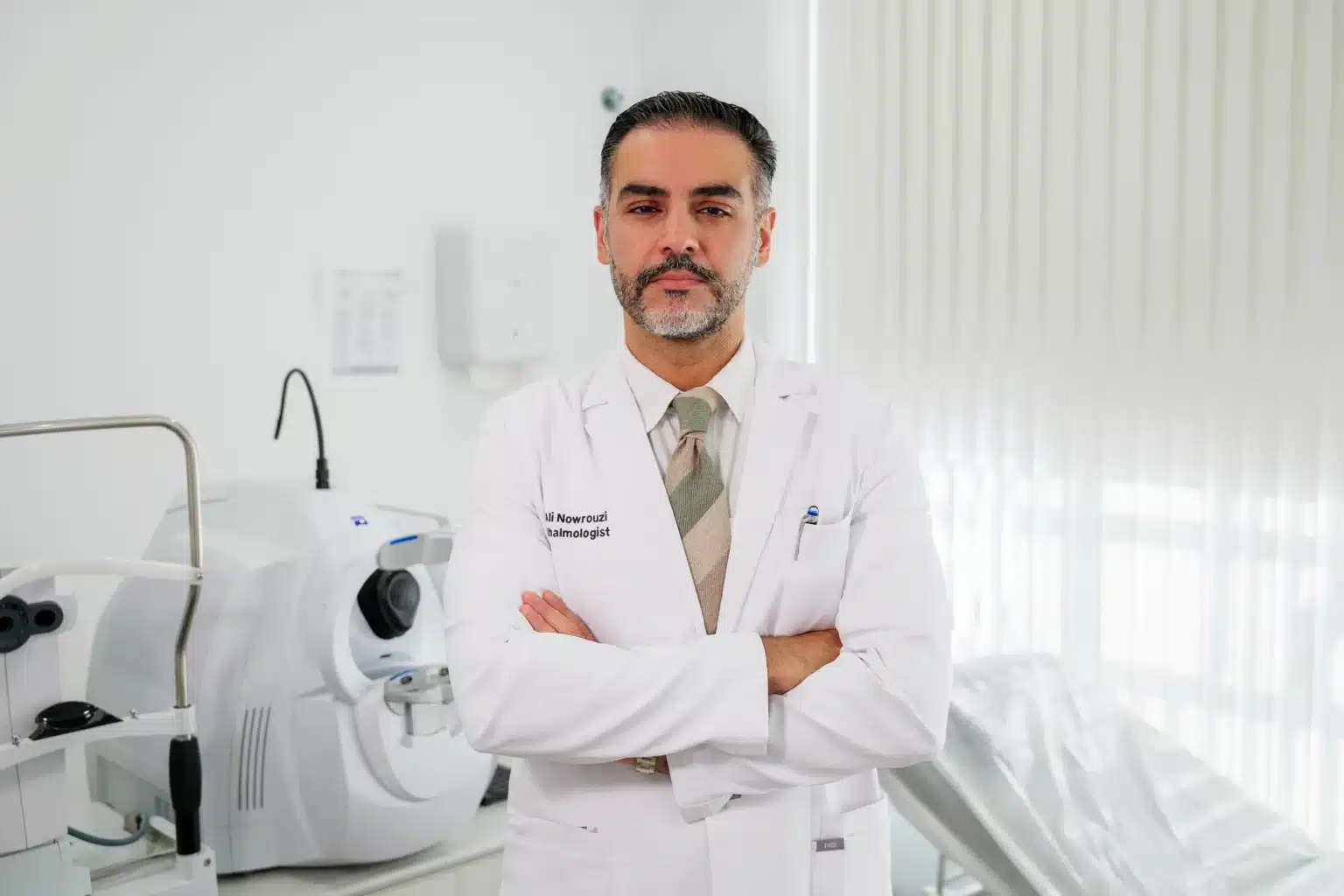
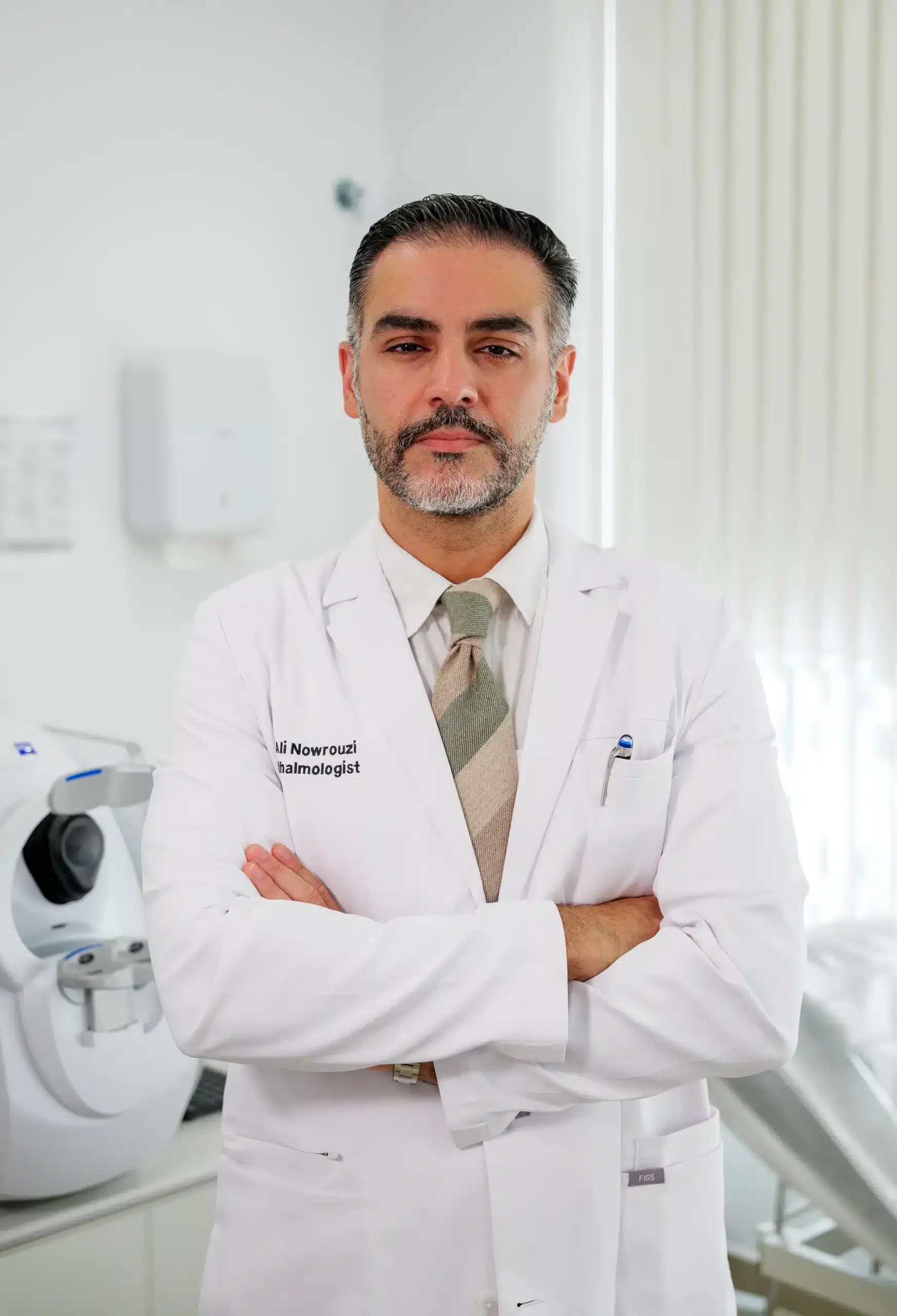
Dr. Ali Nowrouzi MD, FACS, FICO, FWCRS, FEBOS-CR is an ophthalmologist specialising in refractive and corneal surgery, offering individualised vision correction assessments for patients who wish to reduce their dependence on glasses and contact lenses.
Dr. Nowrouzi holds the FEBOS-CR, the European subspecialty diploma in cataract and refractive surgery awarded by the European Board of Ophthalmology and the ESCRS after a specific examination. In recognition of his professional expertise, he has also received two Top Doctors Certificates of Medical Excellence (2023-2024 and 2025-2026).
Modern refractive surgery offers several options for correcting myopia (short-sightedness), hyperopia (long-sightedness), astigmatism and, in selected patients, presbyopia—the age-related loss of near vision that typically becomes noticeable after the age of 40.
At our clinic, treatment planning combines advanced diagnostic technology with personalised surgical techniques. The aim is to understand not only your prescription, but also the three-dimensional structure of your cornea and the optical characteristics of your visual system.
Personalised laser vision correction based on 3D eye analysis
Every eye is different. Two patients with the same glasses prescription may have significantly different corneal shapes, thickness profiles, optical aberrations and visual requirements.

Rather than applying the same correction profile to every patient, personalised refractive surgery aims to tailor treatment to the characteristics of each eye.
This process can include three-dimensional corneal tomography, detailed corneal topography, assessment of the ocular surface, pupillometry and analysis of the eye’s optical aberrations, depending on the individual clinical indication.
Advanced diagnostic systems allow the surgeon to evaluate the cornea’s shape and structure in three dimensions and, where appropriate, assess optical imperfections that may contribute to reduced visual quality.
These measurements help determine whether a patient is suitable for laser vision correction, which treatment profile may be appropriate and whether an alternative procedure would be safer or more effective.
The objective is not simply to reduce the glasses prescription. It is to optimise visual function while respecting the anatomical characteristics and safety limits of each eye.
iVis iRes®: advanced excimer laser technology
The iVis iRes® is an advanced excimer laser system designed for customised refractive and therapeutic corneal surgery.
Its technology supports individualised corneal ablation profiles planned according to relevant diagnostic measurements. The platform incorporates high-speed laser delivery and an integrated system designed to support accurate treatment positioning and execution.
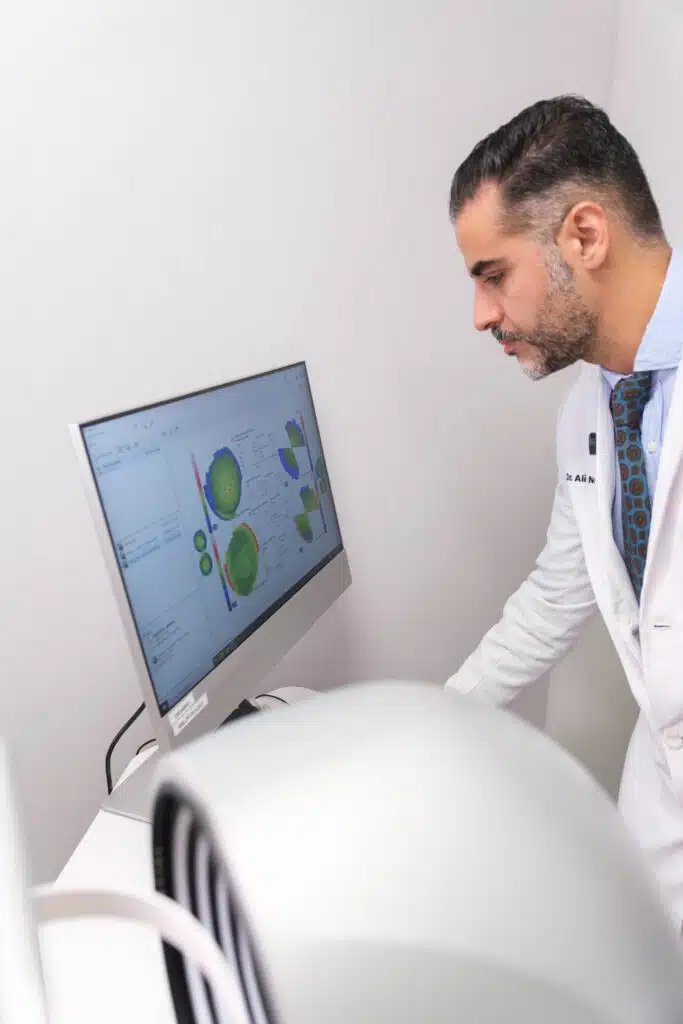
When combined with detailed preoperative diagnostics and appropriate treatment planning, the iVis platform can form part of a highly personalised approach to corneal laser surgery.
However, technology is only one component of successful treatment. Diagnostic accuracy, appropriate patient selection, surgical expertise and postoperative care remain essential.
At our clinic in Marbella, the choice of treatment is based on the patient’s individual findings rather than on the assumption that one laser or technique is suitable for everyone.
Customised Femto-LASIK: beyond standard laser correction
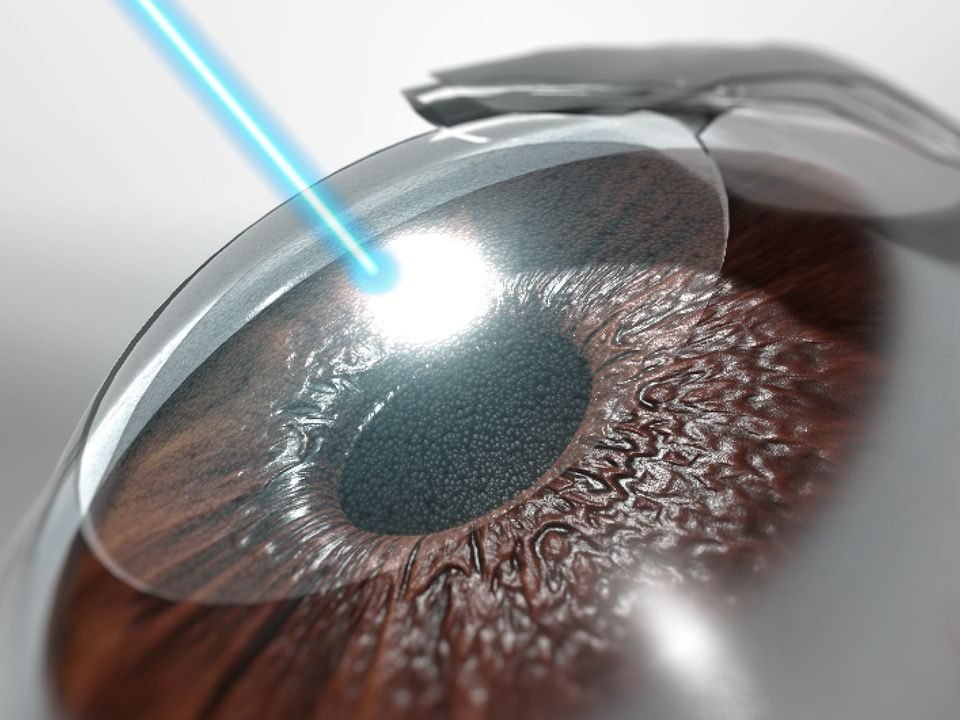
Femto-LASIK combines a femtosecond laser, which creates a thin corneal flap, with an excimer laser that reshapes the underlying corneal tissue to correct refractive error.
It is commonly used in appropriately selected patients with myopia, hyperopia and astigmatism. Depending on the treatment plan, laser vision correction may also address presbyopia-related visual needs using specialised strategies.
At our clinic, we offer customised topography-guided and aberrometry-optimised Femto-LASIK, where the patient’s diagnostic findings support these approaches.
Topography-guided treatment uses detailed corneal surface measurements to plan a treatment profile based on corneal shape. Aberrometry-guided treatment uses measurements of optical aberrations to help customise correction when clinically appropriate.
The purpose of these approaches is to go beyond correction of the basic glasses prescription and consider additional optical characteristics that may affect visual quality.
What level of vision can you expect after laser eye surgery?
In selected patients, postoperative visual acuity may reach 20/15 or better. Some individuals may achieve excellent distance vision that compares favourably with their corrected vision using glasses or contact lenses.
However, these outcomes depend on several factors, including preoperative visual acuity, corneal characteristics, the presence of higher-order aberrations, retinal and optic nerve health, tear film quality and the individual’s healing response.
No particular level of visual acuity can be guaranteed for every patient.
Our approach is to use detailed diagnostics and personalised treatment planning to identify the safest and most appropriate opportunity to optimise each patient’s visual function.
Femto-LASIK and presbyopia
Presbyopia is the age-related reduction in the eye’s ability to focus on near objects. It commonly becomes noticeable after the age of 40, when reading small print and using a mobile phone at close range may become increasingly difficult without reading glasses.
For suitable patients, specialised laser vision correction strategies, including PresbyLASIK or blended-vision approaches, may help reduce dependence on reading glasses.
The appropriate technique depends on age, prescription, corneal anatomy, ocular dominance, visual priorities and tolerance of the potential optical compromises associated with multifocal or blended vision.
A comprehensive assessment is essential to establish realistic expectations and determine whether laser treatment, another surgical option or non-surgical correction is most appropriate.
TransPRK and cTen®: alternatives for selected corneas
Femto-LASIK is not the best option for every patient. In certain cases, surface laser procedures such as TransPRK or specialised customised transepithelial techniques such as cTen® may offer an alternative.
These procedures reshape the cornea without creating a LASIK flap.
One potential advantage is their suitability for selected patients with relatively thin corneas or particular corneal shape characteristics that make flap-based surgery inappropriate.
However, a thin or asymmetric cornea must be evaluated carefully before any corneal laser procedure. Corneal asymmetry can sometimes indicate underlying biomechanical weakness or early keratoconus, in which case corneal laser correction may be contraindicated.
Detailed tomography, corneal thickness mapping and other investigations, when indicated, help identify patients who may safely undergo treatment and those who should consider alternative options.
The choice between Femto-LASIK, TransPRK, cTen®, SMILE or a non-corneal procedure should always follow an individual assessment rather than a preference for one technique.
Which technique is right for your eyes?
Finding out takes a full assessment of your prescription, the shape and thickness of your cornea and your ocular surface. Book an assessment with Dr. Nowrouzi in Marbella.
Can laser eye surgery correct myopia, hyperopia, astigmatism and presbyopia?
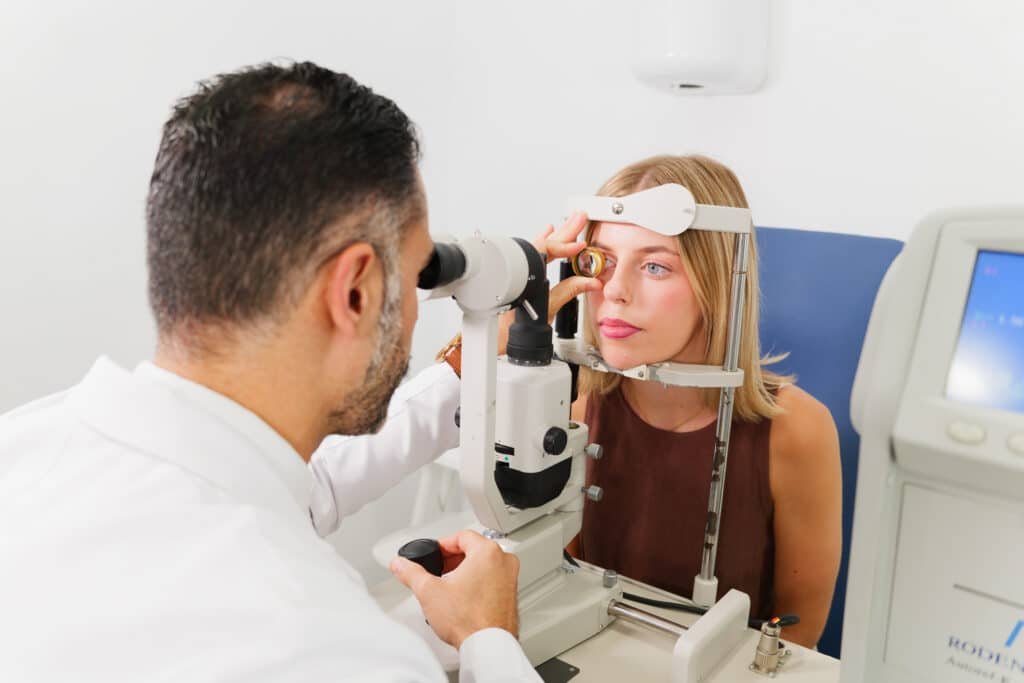
Modern refractive surgery can address several types of visual difficulty, depending on the patient’s anatomy and prescription.
- Myopia: difficulty seeing distant objects clearly.
- Hyperopia: difficulty focusing at near, and sometimes at distance, depending on the degree of hyperopia.
- Astigmatism: blurred or distorted vision caused by differences in the eye’s optical power in different meridians.
- Presbyopia: age-related difficulty focusing on near objects, usually becoming noticeable after 40.
Different procedures have different indications and limitations. Some patients may benefit from corneal laser correction, while others may be better candidates for an Implantable Collamer Lens (ICL), Lens Upgrade (Refractive Lens Exchange / Lens Replacement) or continued use of glasses or contact lenses.
The best option depends on a full ophthalmological examination and a discussion of the patient’s expectations.
Why advanced corneal diagnostics matter
Before recommending refractive surgery, the surgeon should assess factors such as:
- Refractive prescription and its stability.
- Three-dimensional corneal shape and thickness.
- Corneal asymmetry and possible signs of keratoconus.
- Corneal epithelial characteristics when indicated.
- Pupil characteristics and relevant optical aberrations.
- Tear film quality and ocular surface health.
- Retinal and optic nerve health when clinically indicated.
- Age, lifestyle, occupation and visual expectations.
These measurements help identify potential risks, determine the suitability of each technique and support personalised treatment planning.
A detailed assessment is particularly important when considering customised treatments or when a patient has an unusual corneal profile, previous ocular surgery or complex visual requirements.

What should you expect after laser eye surgery?
Recovery depends on the procedure performed and the individual’s healing response.
After Femto-LASIK, visual recovery is often relatively rapid, although temporary dryness, light sensitivity and fluctuating vision can occur.
Following TransPRK or cTen®, the corneal epithelium must heal, and visual recovery follows a different timeline. Patients receive individual postoperative instructions and follow-up appointments according to their procedure and clinical findings.
Patients should discuss driving, returning to work, sporting activities and travel with their surgeon before treatment. The postoperative plan should include appropriate medication, ocular surface care and monitoring for potential complications.
Laser eye surgery in Marbella for local and international patients
Marbella and the Costa del Sol attract patients seeking specialist ophthalmological care from Spain and abroad.

For patients travelling to Marbella, treatment planning should include the initial diagnostic assessment, the surgical procedure where appropriate, postoperative reviews and arrangements for care if concerns develop after returning home.
Patients should allow sufficient time for the recommended follow-up schedule and should not assume that they can travel immediately after surgery.
At our clinic, the aim is to provide clear information about available treatments, expected recovery, potential risks and the practical arrangements required for safe postoperative care.
About Dr. Nowrouzi
Dr. Nowrouzi specialises in refractive and corneal surgery and provides personalised assessments for patients considering laser vision correction.
The consultation focuses on understanding each patient’s visual requirements, examining the cornea and optical system, and determining which treatment options are clinically appropriate.
Advanced technology can provide valuable diagnostic information and support individualised treatment planning. Nevertheless, careful patient selection, surgical judgement and realistic expectations remain central to good clinical practice.
The objective is to recommend a treatment that is appropriate for the individual patient—not simply the newest or fastest available technology.
Book a laser eye surgery assessment in Marbella
If you are considering LASIK, customised Femto-LASIK, TransPRK, cTen®, SMILE or presbyopia correction, a comprehensive ophthalmological assessment is the first step.
During your consultation, you can discuss your prescription, corneal measurements, visual expectations, potential risks, expected recovery and the treatment options most appropriate for your eyes.
Book a personalised refractive surgery consultation with Dr. Nowrouzi in Marbella.
Discover which vision correction options may be suitable for you and how advanced diagnostic technology can help guide an individualised treatment plan.