
Dark circles do not always have the same origin, which is why a single treatment rarely addresses them all. At Dr. Ali Nowrouzi's practice in Marbella, the Dynamic Eye Rejuvenation protocol combines regenerative medicine, laser and, when indicated, eyelid surgery, to address each component of a tired-looking gaze on an individual basis.
Pigmentation, vascular alterations, volume loss, fat pockets, skin laxity: each of these factors calls for a different tool. Treating all dark circles the same way, with a single technique, usually leaves at least one of these components unaddressed.
Why dark circles require a personalised treatment
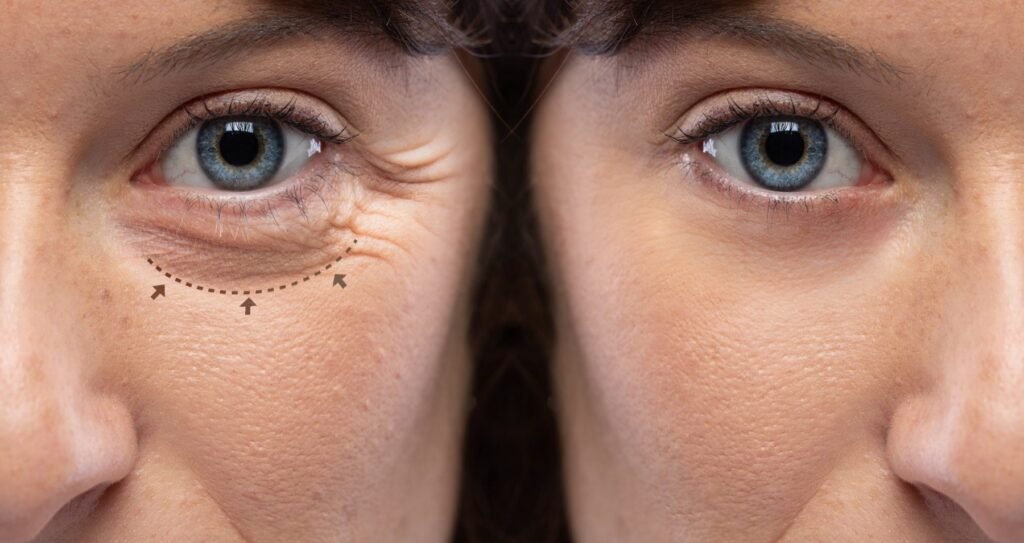
The periocular region ages differently from the rest of the face. The skin is thinner, has less subcutaneous fat and is subject to constant movement, which explains why creams or a single laser are not always sufficient.
That is the logic behind Dynamic Eye Rejuvenation: not applying as many techniques as possible, but selecting those that address the component that predominates in each patient.
What the Dynamic Eye Rejuvenation protocol includes
Depending on the needs identified during the assessment, the protocol may combine the following elements.
PRP (platelet-rich plasma)
PRP is obtained from the patient's own blood, concentrating platelets and growth factors with regenerative capacity on the skin. A clinical study with 32 patients compared, in the same patient, one side treated with fractional Er:YAG laser combined with PRP versus the other side treated with laser alone, and recorded a greater improvement in periorbital hyperpigmentation on the side that received the combination.
Nucleotides and exosomes
Nucleotides and exosomes are part of contemporary regenerative medicine protocols aimed at improving skin quality. Their role in aesthetic dermatology remains the subject of active research: a recent review on exosomes in aesthetic medicine notes that preliminary results are promising, but that there is still no consensus on their long-term use and that, to date, no exosome product has FDA approval for medical use. That is why they are proposed in the practice with realistic expectations, as a complement within a broader protocol and never as a substitute for techniques with greater scientific backing.
Fractional CO₂ laser
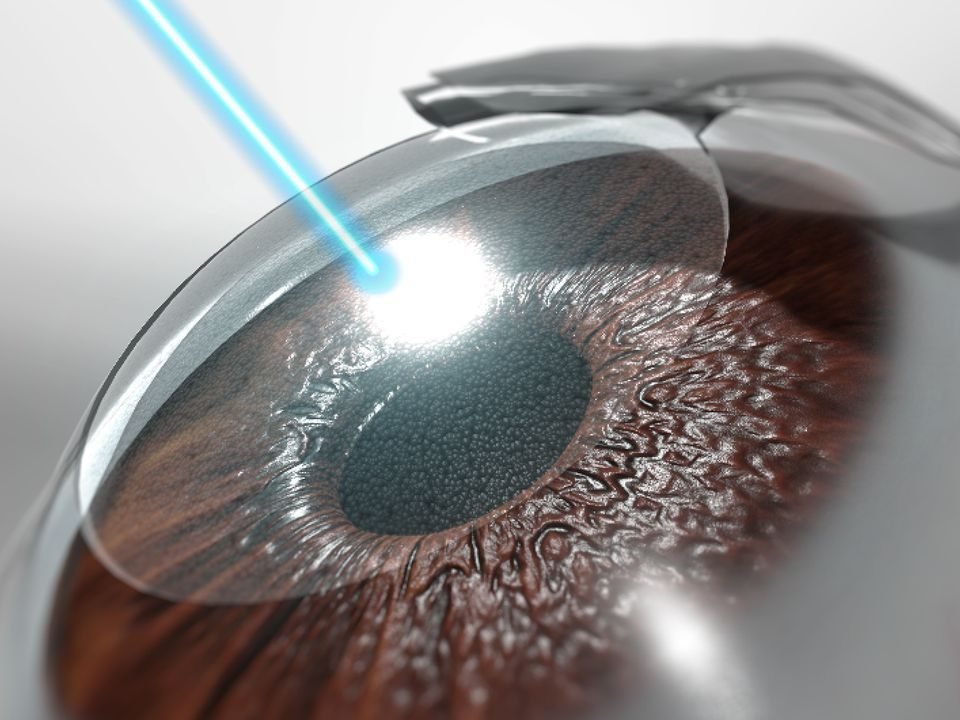
Fractional CO₂ laser aims to stimulate collagen production and improve texture, fine lines and certain components of pigmentation. A retrospective study with 24 patients treated with a hybrid CO₂ and 1570 nm laser for periocular rejuvenation recorded objective improvements on all evaluated scales, with a mean recovery time of less than one week.
Surgical and non-surgical blepharoplasty
When the predominant component is a structural excess of skin or fat, non-surgical treatments can improve the appearance but do not replace surgery. The blepharoplasty is then considered conservatively, assessing eyelid anatomy, brow position and the relationship between the lower eyelid and the cheek. In patients with mild or moderate changes, however, a combination of PRP, laser and regenerative treatments may be sufficient.
How to know which treatment you need according to your type of dark circles
The first step in the consultation is to identify which component predominates:
- Pigmentary dark circles: respond best to treatments targeting pigmentation and laser.
- Dark circles due to skin quality: benefit from regenerative protocols such as PRP.
- Dark circles with laxity and wrinkles: fractional laser is usually the main tool.
- Dark circles with bags and excess skin: this is where surgical assessment comes in.
- Mixed dark circles: these benefit the most from a combined, personalised protocol.
This classification is for guidance only. The final decision depends on a specific examination of the periocular region, not on a general template.
When it makes sense to consider surgery
Not every tired-looking gaze needs surgery, but when excess skin interferes with the aesthetic result or even the visual field, non-surgical treatments have a clear limit. The oculoplastic surgery performed in such cases seeks precisely that balance: correcting the structural without changing the natural expression of the face. This is also a line drawn by reference clinical guidelines: the American Academy of Ophthalmology describes blepharoplasty as the procedure to remove excess periocular skin and fat when other measures are not sufficient.
Consultation with Dr. Ali Nowrouzi in Marbella
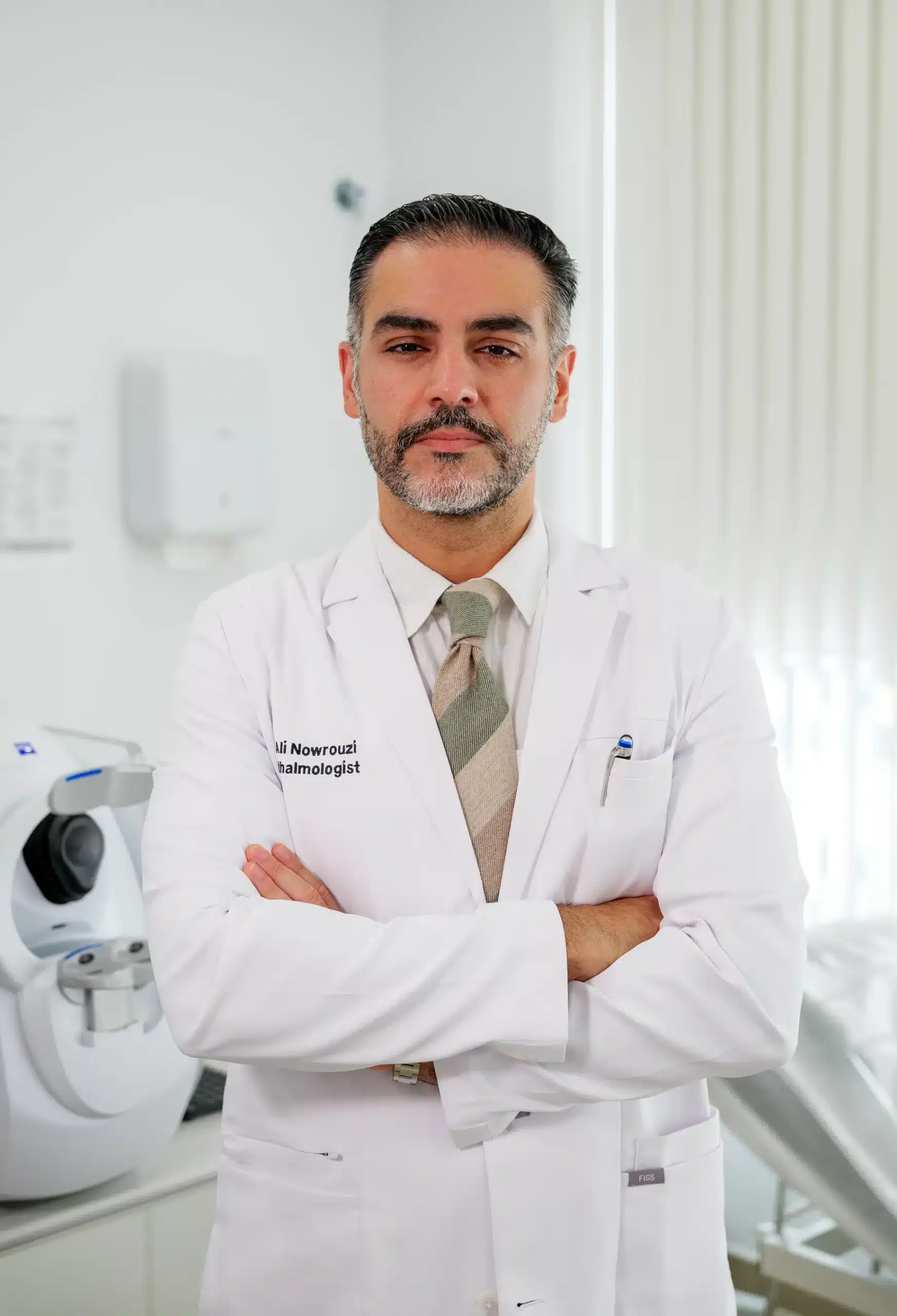
Dr. Ali Nowrouzi is the author and co-author of more than 100 scientific publications and has been recognised in Top Doctors in 2024, 2025 and 2026. He sees patients at several centres on the Costa del Sol, and you can learn more about his career and training before deciding.
A specialised assessment makes it possible to determine which combination of PRP, nucleotides, exosomes, CO₂ laser and, if applicable, blepharoplasty, offers the best balance between results, safety and recovery time for each specific case.
Frequently asked questions about dark circle treatment
What sets Dynamic Eye Rejuvenation apart from a single treatment for dark circles?
It combines different techniques (PRP, nucleotides, exosomes, CO₂ laser and surgery when indicated) according to the component that predominates in each patient, rather than applying the same technique to all cases.
Do non-surgical treatments replace blepharoplasty?
Not always. They improve skin quality and certain signs of ageing, but when there is a structural excess of skin or fat, the blepharoplasty usually offers a result that medical treatments cannot reproduce.
Do PRP and exosomes give the same results?
No. PRP has more clinical studies supporting its combined use with laser. Exosomes are a more recent line, with positive preliminary results but still in a phase of further research.
Is periocular CO₂ laser painful?
It is usually performed with topical anesthesia, and discomfort is limited to the first few days, with redness or mild swelling being the most common effects during recovery.
What type of under-eye circles benefits most from a combined protocol?
Mixed-origin under-eye circles, where pigmentation, laxity, and volume loss coexist, are usually the ones that benefit most from combining several techniques rather than a single one.
Where can I have my case assessed with Dr. Ali Nowrouzi?
At his clinic in Marbella, where an examination of the periocular region is performed before proposing any combination of treatments.
If you have under-eye circles, bags, laxity, or a look that no longer reflects how you feel, request an assessment with Dr. Ali Nowrouzi to find out which combination of treatments fits your case.