
Personalised refractive surgery in Marbella: LASIK, SMILE pro, TransPRK, topography-guided, aberrometry-guided and wavefront-guided treatment
Refractive surgery has evolved enormously in recent years. We now have very advanced laser technologies to correct short-sightedness (myopia), long-sightedness (hypermetropia) and astigmatism and, in selected patients, various strategies to treat presbyopia and reduce dependence on glasses.
One of the questions patients ask most often is:
Which laser technology is best for laser eye surgery?
The answer is important: there is no single technology that is best for every patient.
The best refractive surgery is the one that uses the most suitable technology for the specific characteristics of each eye.
That is why, before choosing between Femto-LASIK, SMILE pro, TransPRK, topography-guided, aberrometry-guided or wavefront-guided treatment, a complete assessment of your refraction, cornea and ocular surface is essential.
In Marbella, modern refractive surgery makes it possible to design increasingly personalised treatments, aiming not only to eliminate dioptres but to achieve excellent visual quality while preserving corneal safety in the long term.
In this article
- What does using advanced laser technology mean?
- Which technology is best for refractive surgery?
- SMILE pro: an advanced technology for correcting myopia
- TransPRK: “no-touch” surface refractive surgery
- Topography-guided laser: personalising treatment to the shape of the cornea
- Aberrometry-guided treatment: personalising treatment to the aberrations
- Wavefront-guided treatment: treating vision beyond dioptres
- Advanced eye tracker: precision during laser treatment
- Iris recognition and cyclotorsion compensation
- Topography-guided vs aberrometry-guided vs wavefront-guided treatment
- Which technology is best for myopia?
- Which technology is best for hypermetropia?
- Which technology is best for astigmatism?
- Can presbyopia be treated with laser surgery?
- What does “100% laser” surgery mean?
- Why a refractive surgery specialist matters
- Therapeutic refractive surgery technology for visual disorders
- Which tests should be done before refractive surgery?
- Frequently asked questions about refractive surgery
- Refractive surgery in Marbella
What does using advanced laser technology mean?
Modern refractive surgery is not simply a matter of “putting the patient under a laser”.
Today we can analyse the anatomy and optics of each eye in great detail and use that information to design a personalised treatment.
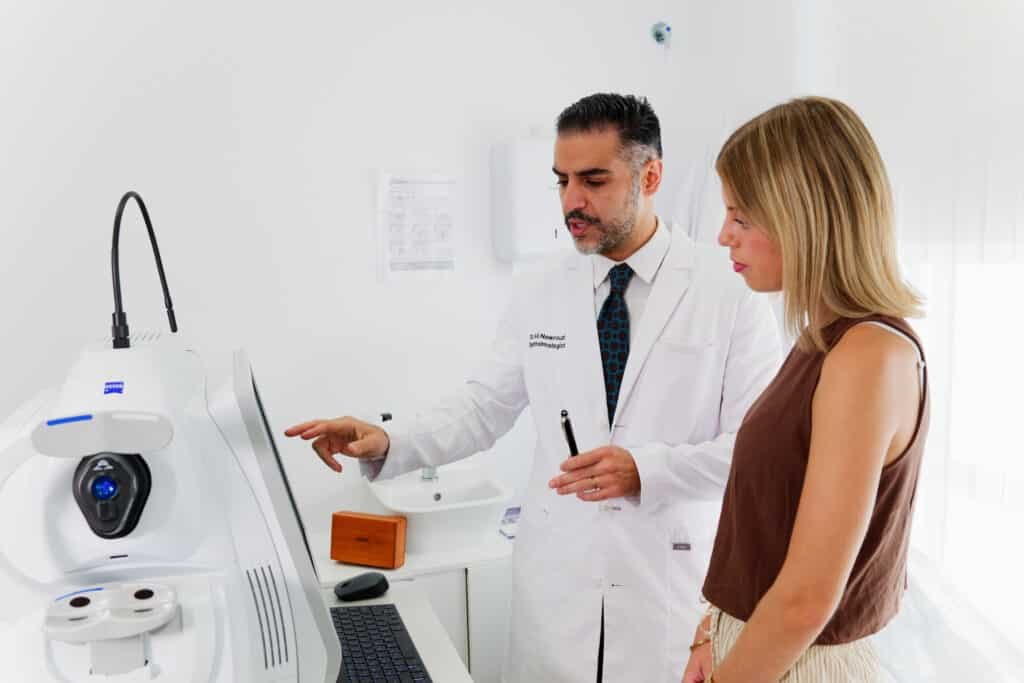
Depending on the technique, we can use:
- Femtosecond laser.
- Excimer laser.
- SMILE pro technology.
- TransPRK.
- Topography-guided treatment.
- Wavefront-guided treatment.
- Aberrometry-guided treatment.
- Advanced eye-tracking systems.
- Iris recognition and cyclotorsion compensation.
- Corneal tomography and topography.
- Aberrometry.
- Epithelial thickness maps.
- Advanced tear film analysis.
So the question should not only be:
“Which laser does the clinic have?”
But rather:
“Which combination of diagnosis, laser technology and personalised planning is most suitable for my eyes?”
Which technology is best for refractive surgery?
The answer depends on each patient.
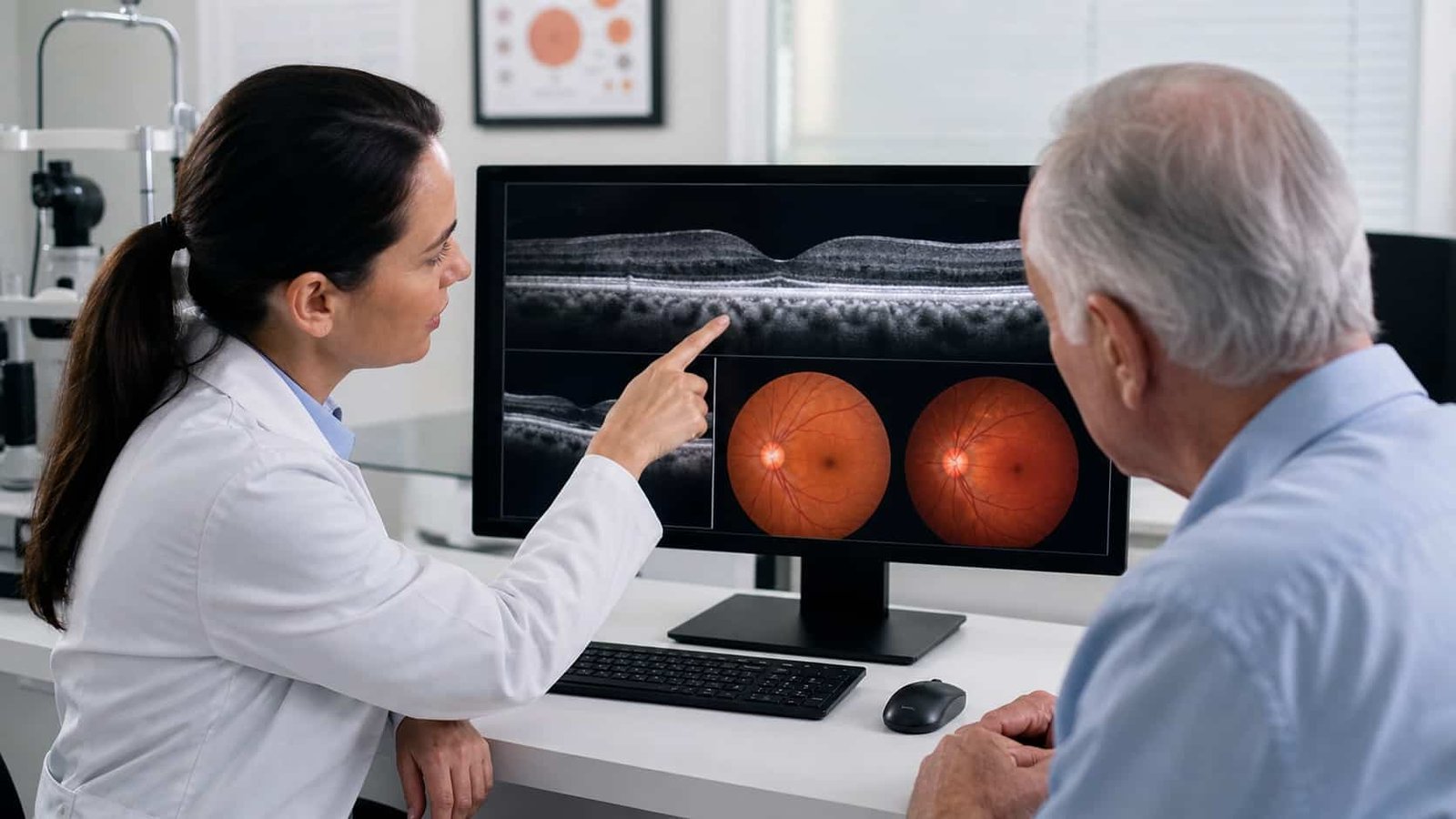
A patient with a perfectly regular cornea may benefit from a different technique from someone with irregular astigmatism, high optical aberrations, corneal asymmetry, thin corneas or tear film problems.
Before choosing the technique, it is important to study:
- Myopia.
- Hypermetropia.
- Astigmatism.
- Corneal thickness.
- Topography and tomography.
- Corneal curvature.
- Epithelial thickness map.
- Optical aberrations.
- Tear film.
- Pupil.
- Stability of the prescription.
- Age.
- Visual expectations.
- Individual risk of corneal ectasia.
Modern refractive surgery should be personalised and based on objective data.
Want to know which technology is right for you?
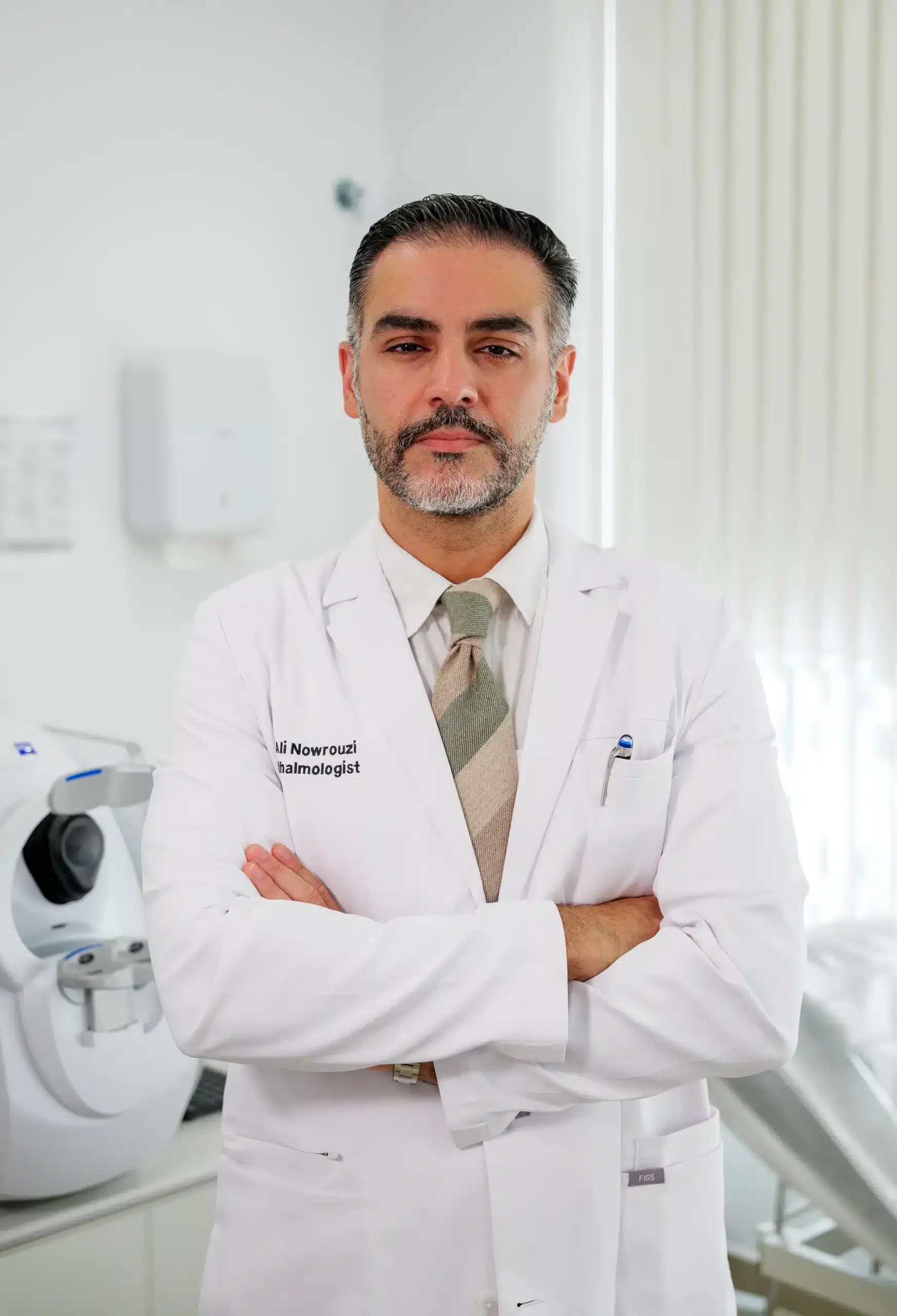
The first step is a full refractive and corneal assessment. Book an assessment with Dr. Nowrouzi in Marbella.
SMILE pro: an advanced technology for correcting myopia
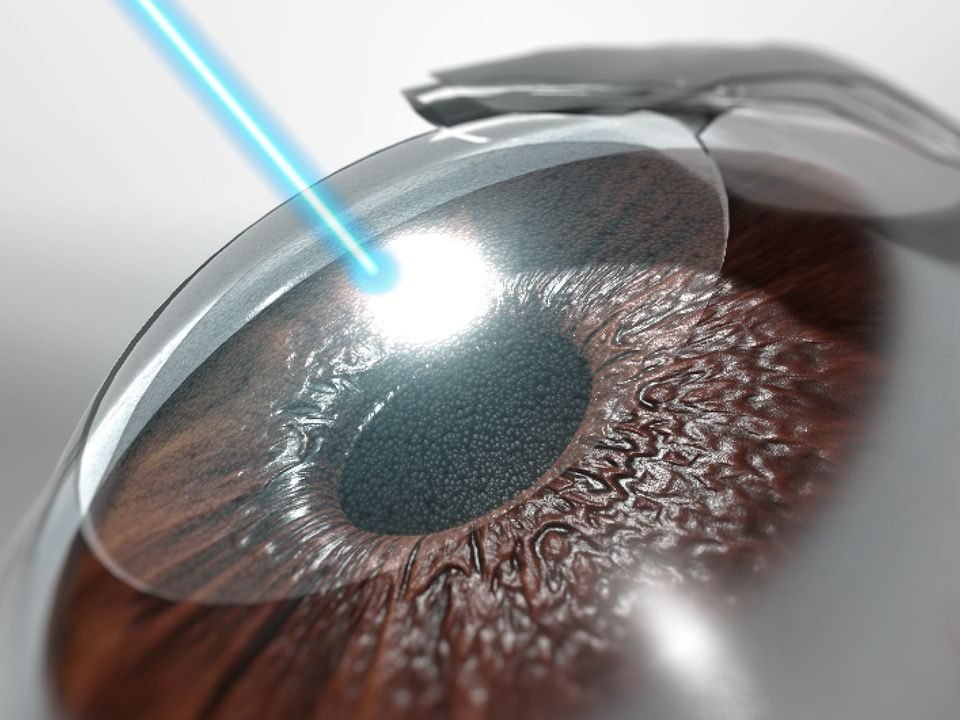
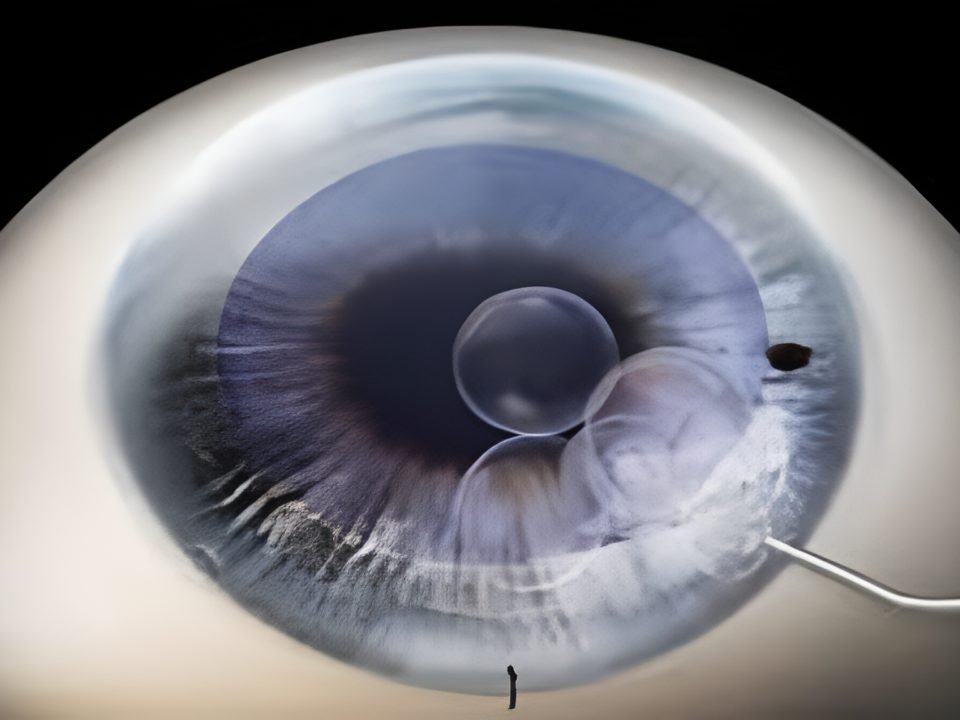
The SMILE technique (small incision lenticule extraction), and especially latest-generation platforms such as SMILE pro, use a femtosecond laser to create a lenticule inside the cornea.
The surgeon then removes this lenticule through a small incision.
One of the main features of SMILE is that it does not require a corneal flap to be created, as LASIK does.
It can be an excellent option for certain patients with myopia and astigmatism.
Possible advantages of SMILE pro
- No corneal flap required.
- Small incision.
- Treatment with a femtosecond laser.
- Visual recovery that is usually quick.
- Precise correction of certain types of myopia and astigmatism.
- A different corneal architecture from LASIK.
However, SMILE pro is not automatically better than LASIK or TransPRK for every patient.
The decision should be made after studying the cornea and the optical characteristics of each eye in detail.
TransPRK: “no-touch” surface refractive surgery
The TransPRK (transepithelial photorefractive keratectomy) technique is an evolution of conventional PRK and is an important alternative within excimer laser refractive surgery.
Unlike conventional PRK, in TransPRK both the removal of the epithelium and the refractive treatment are carried out entirely by the excimer laser, with no need to remove the epithelium manually with surgical instruments.
For this reason, it is also often called a “no-touch” or contact-free technique.
The laser removes the epithelium in a controlled way and then reshapes the cornea to correct the refractive error.
When may TransPRK be a good option?
TransPRK can be a particularly useful alternative for certain patients in whom a surface technique is preferred and creating a corneal flap is not desirable.
In selected patients, it can be used to correct:
- Myopia.
- Astigmatism.
- Certain combinations of refractive errors.
Its main features include:
- No corneal flap required.
- No instruments needed to remove the epithelium manually.
- It uses an excimer laser.
- It allows personalised treatments.
- It can be an option for certain patients with specific corneal characteristics.
Recovery after TransPRK can be slower than after LASIK or SMILE pro, especially during the first few days, because it is a surface technique.
That is why the choice must be tailored to each patient.
Topography-guided laser: personalising treatment to the shape of the cornea
The topography-guided technology uses detailed information about the corneal surface to design a personalised treatment.
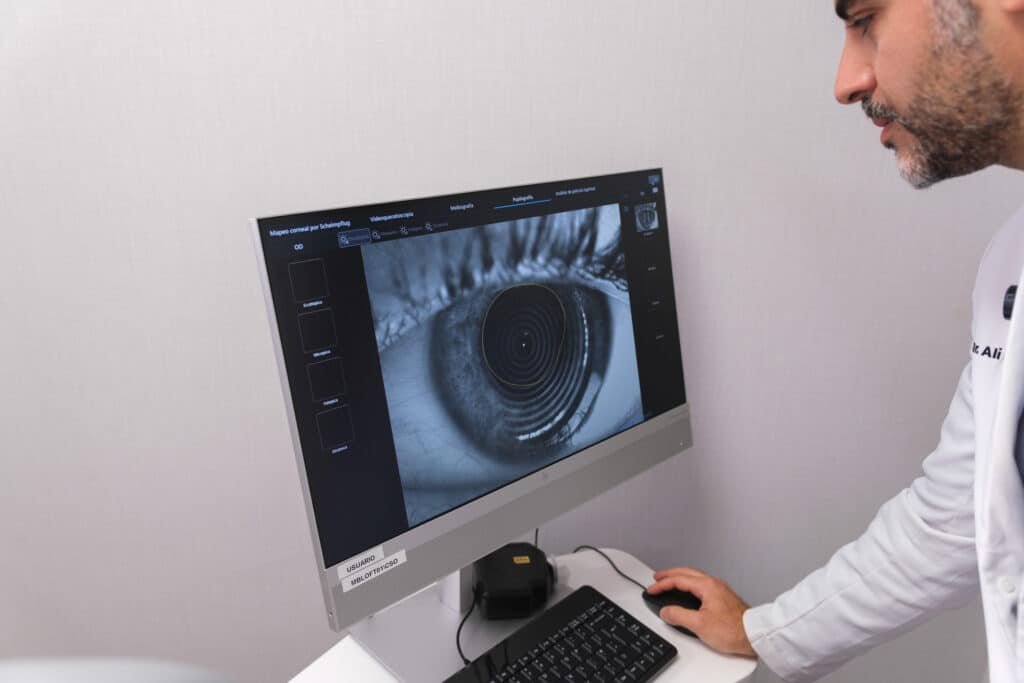
It can be particularly useful when there is:
- Irregular astigmatism.
- Corneal asymmetry.
- Surface irregularity.
- An altered corneal shape.
- Certain optical aberrations.
The topography and tomography show what the cornea is really like before deciding which ablation pattern to use.
The aim is for the treatment not simply to eliminate dioptres, but to take into account the individual shape of the cornea.
Aberrometry-guided treatment: personalising treatment to the aberrations
Aberrometry analyses the optical aberrations of the visual system.
In addition to the conventional refractive errors (myopia, hypermetropia and astigmatism), there are other optical imperfections known as higher order aberrations.
These can affect:
- Quality of night vision.
- Contrast.
- Halos.
- Glare.
- Sharpness.
- Image quality.
In certain patients, using aberrometry data can help design a more personalised treatment.
Wavefront-guided treatment: treating vision beyond dioptres
The wavefront-guided technology analyses how light behaves as it passes through the optical system of the eye.
The aim is to identify not only the conventional dioptres but also certain individual optical aberrations.
This makes it possible to design personalised treatments aimed at optimising visual quality.
Not every patient necessarily needs wavefront-guided treatment. The decision should be based on the results of the pre-operative assessment.
Advanced eye tracker: precision during laser treatment
A key technology in modern refractive surgery platforms is the eye tracker, or eye-tracking system.
Even when the patient keeps looking at the target light, the eye can make small involuntary movements during the procedure.
Advanced eye-tracking systems continuously monitor the position of the eye and allow the laser to adapt the delivery of the treatment to the eye movements detected.
This is particularly important when high-precision personalised treatments are performed.
Which movements can an advanced system detect?
Depending on the platform, the system can monitor:
- Horizontal movements.
- Vertical movements.
- Torsional movements.
- Changes in the position of the eye.
- Shifts during the treatment.
This technology helps keep the treatment correctly centred and improves the precision of the laser delivery.
Iris recognition and cyclotorsion compensation
Another important aspect of some personalised treatments is ocular cyclotorsion.
During the diagnostic tests the patient is usually sitting up, whereas during surgery they lie down. This change of position can cause a slight rotation of the eye.
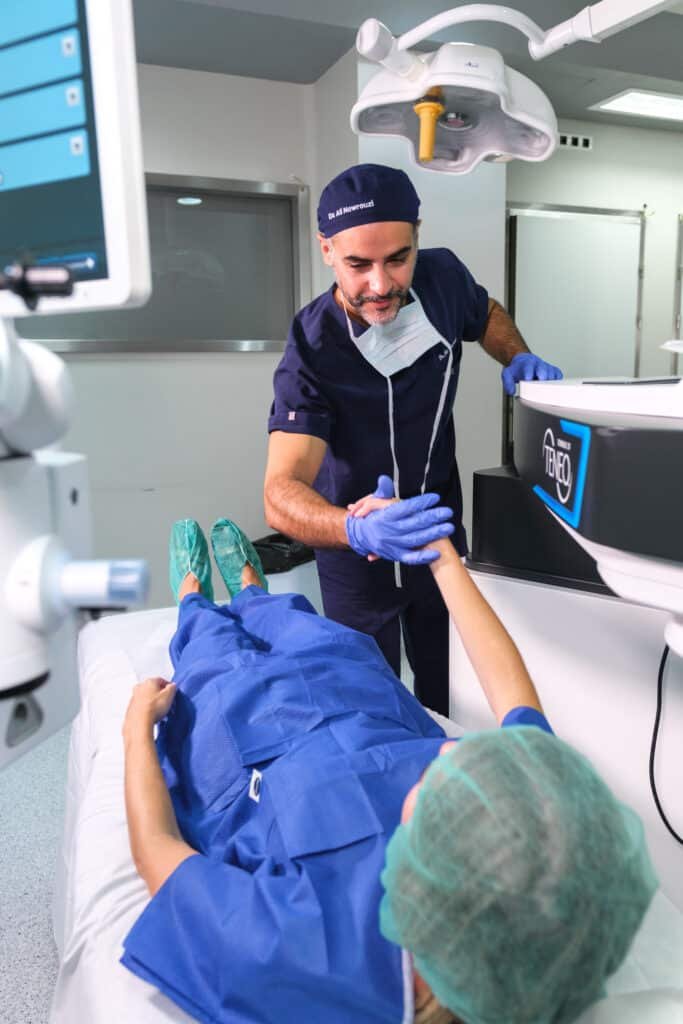
In certain treatments, especially when the axis of astigmatism must be respected precisely, compensating for this rotation can be important.
Advanced systems can use iris recognition and eye-tracking technology to identify the orientation of the eye and help keep the treatment correctly positioned.
This is particularly relevant in personalised treatments for astigmatism.
Topography-guided vs aberrometry-guided vs wavefront-guided treatment
It is not simply a matter of deciding which of these technologies is “the best”.
Each one provides different information.
Which technology is best for myopia?
There are several options for myopia:
- SMILE pro.
- Femto-LASIK.
- TransPRK.
- Personalised PRK.
- Topography-guided treatment.
- Wavefront-guided treatment.
- Aberrometry-guided treatment.
- Phakic intraocular lenses (phakic IOLs), such as the ICL, when corneal laser treatment is not the right option.
The choice depends on the prescription, corneal thickness and geometry, ocular surface, age and other factors.
In some patients, SMILE pro can be an excellent alternative.
In others, a personalised excimer laser treatment may offer greater scope for personalisation.
And in certain cases, laser may not be the best option.
Which technology is best for hypermetropia?
Hypermetropia requires a particularly careful assessment.
Corneal treatment may be suitable for certain patients, but the decision depends on the degree of hypermetropia, the corneal anatomy and age.
In younger patients, corneal refractive surgery may be possible.
However, in older patients, the onset of presbyopia changes the approach completely.
That is why a 45- to 50-year-old with hypermetropia should not receive exactly the same advice as a 25-year-old patient.
Which technology is best for astigmatism?
Astigmatism can be regular or irregular.
In regular astigmatism, different laser techniques can achieve excellent results when the patient is correctly selected.
When there is irregular astigmatism, the situation is different.
In these cases, the study of corneal topography and tomography becomes fundamentally important.
A topography-guided treatment can be a particularly valuable tool in certain cases because it allows the ablation to be designed according to the individual corneal architecture.
The eye tracker and cyclotorsion compensation can also help maintain the precision of the treatment axis.
Can presbyopia be treated with laser surgery?
Presbyopia is different from myopia, hypermetropia and astigmatism.
It is not simply a “dioptre” that can be eliminated with a conventional treatment.
Presbyopia results from the progressive loss of the ability of the eye’s natural lens to focus at near.
Depending on the patient’s age and characteristics, the following may be considered:
- Monovision.
- Specific corneal treatments.
- Laser refractive surgery in selected patients.
- Lens surgery.
- Multifocal intraocular lenses (IOLs).
- Extended depth of focus (EDOF) IOLs.
- Other premium IOL technologies.
For these patients, the aim should not only be to “get rid of glasses”, but to achieve the best possible balance between distance, intermediate and near vision, while maintaining good visual quality.
Are you a candidate for refractive surgery?
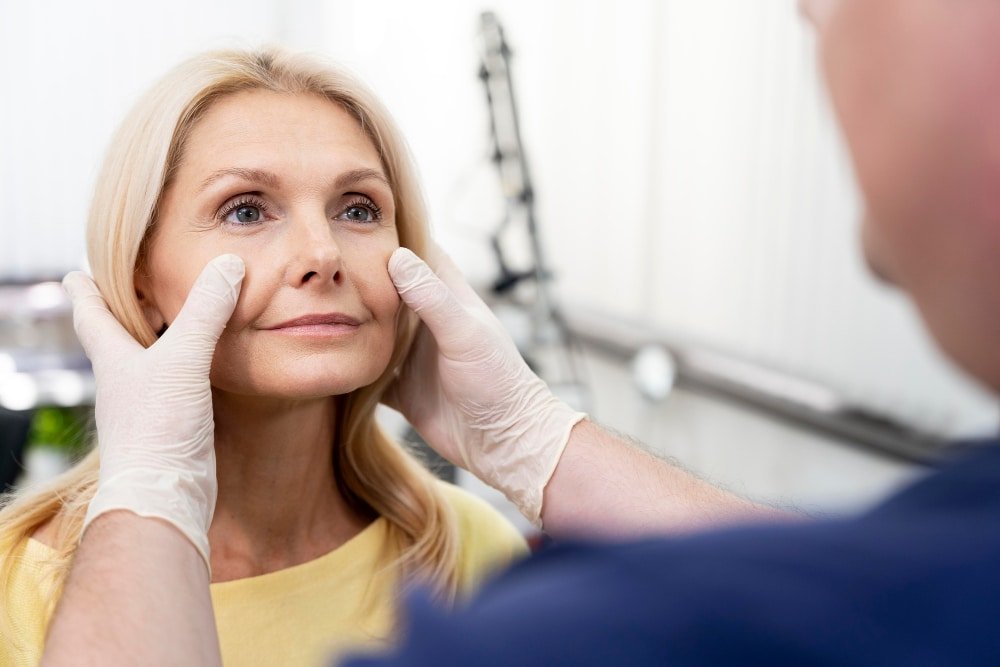
It depends on your prescription, your cornea, your age and what you expect from your vision. We assess all of this with you before suggesting any technique.
What does “100% laser” surgery mean?
In modern refractive surgery, the concept of “100% laser” can refer to procedures in which the main stages of the treatment are carried out with laser platforms, avoiding certain manual steps.
For example, in Femto-LASIK, the flap is created with a femtosecond laser instead of a mechanical microkeratome.
In TransPRK, the corneal surface is prepared with the excimer laser.
In SMILE pro, the lenticule is created with a femtosecond laser.
The advantage of using advanced laser technology is that it allows a high degree of precision and reproducibility. However, using “100% laser” does not mean that a technique is automatically superior for every patient.
Choosing the right technique is still the key factor.
Why a refractive surgery specialist matters
Technology is essential, but the laser alone does not decide which treatment a patient needs.
The outcome depends on the combination of:
Diagnosis + patient selection + technology + planning + surgical experience + postoperative follow-up.
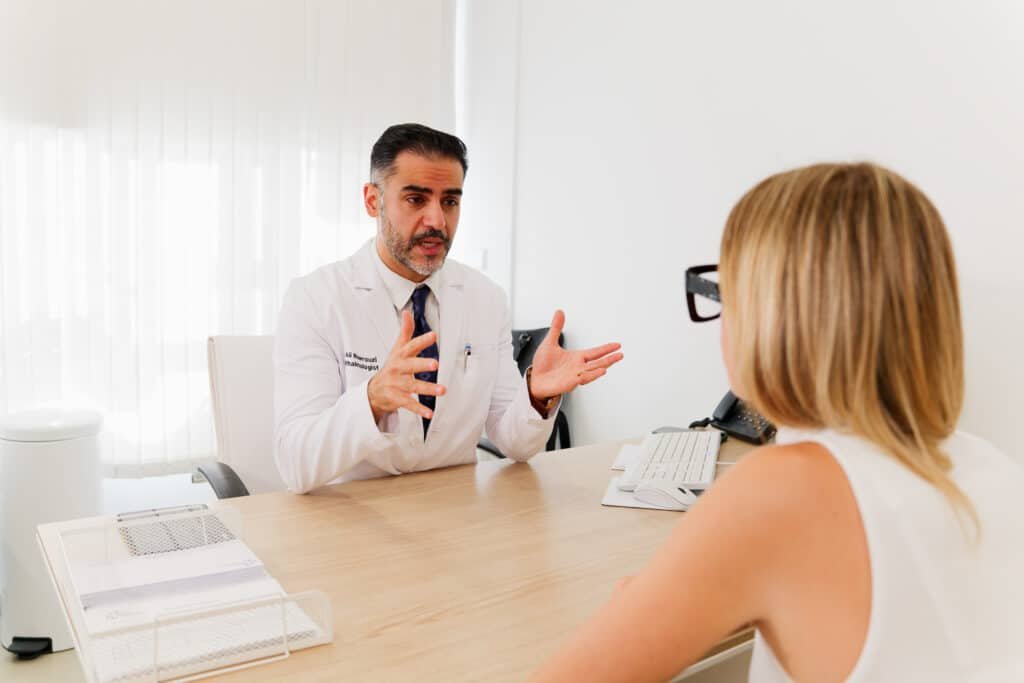
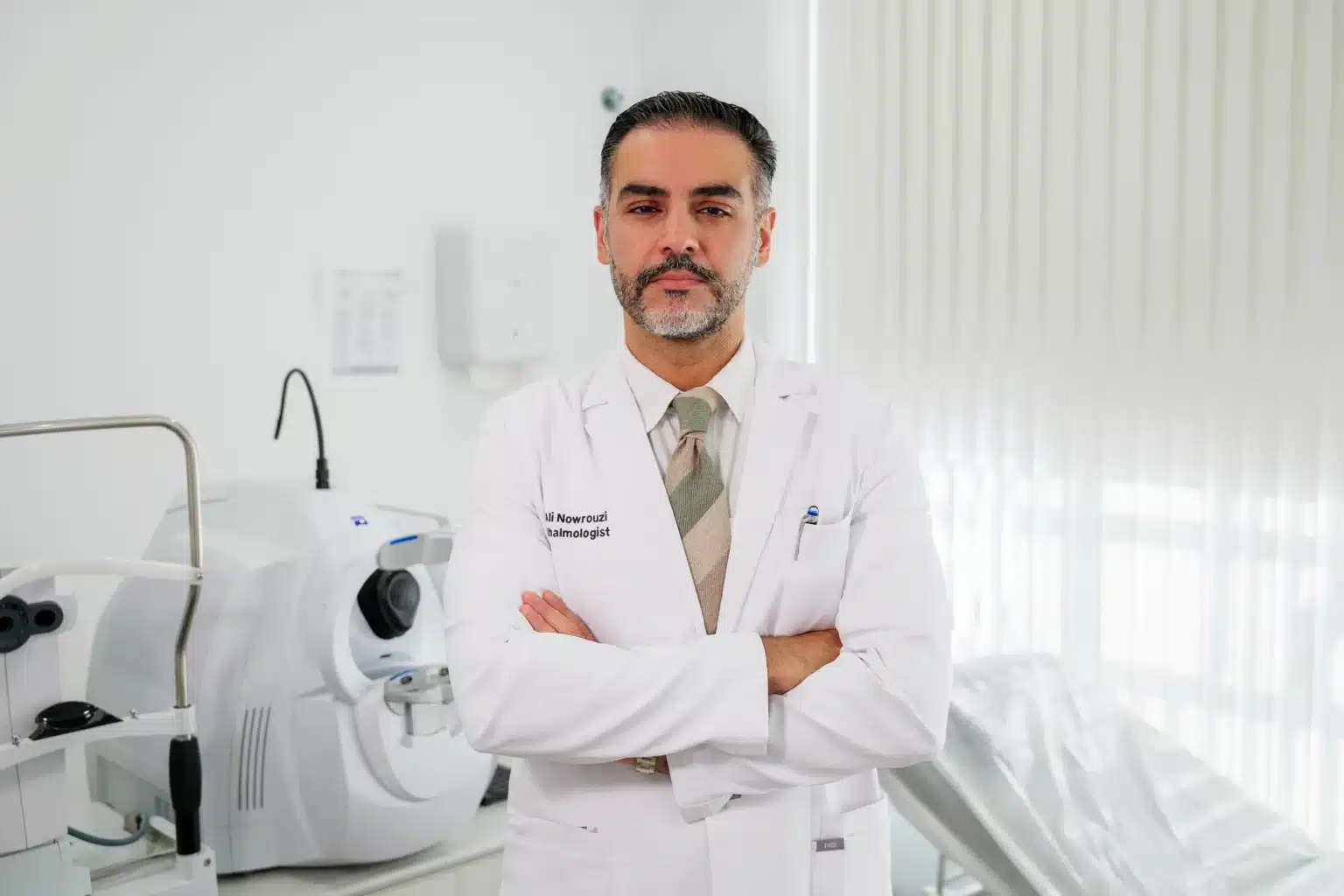
For this reason, it is advisable to have surgery with a specialist who has specific, advanced training in refractive surgery and lens surgery.
The FEBOS-CR (Fellow of the European Board of Ophthalmology Subspecialty – Cataract & Refractive Surgery) diploma certifies specific, advanced training in refractive surgery and lens surgery.
The surgeon’s experience is particularly important in complex cases, high prescriptions, corneas with special characteristics or demanding visual expectations.
Therapeutic refractive surgery technology for visual disorders
Modern refractive surgery should not be seen only as surgery to stop wearing glasses.
In certain patients, personalised techniques can have a functional and therapeutic role, especially when there are selected corneal irregularities that may benefit from personalised treatment.
The aim may be to improve:
- Visual acuity.
- Corneal regularity.
- Optical quality.
- Dependence on glasses or contact lenses.
- Visual function in certain conditions.
Each case requires an individual assessment.
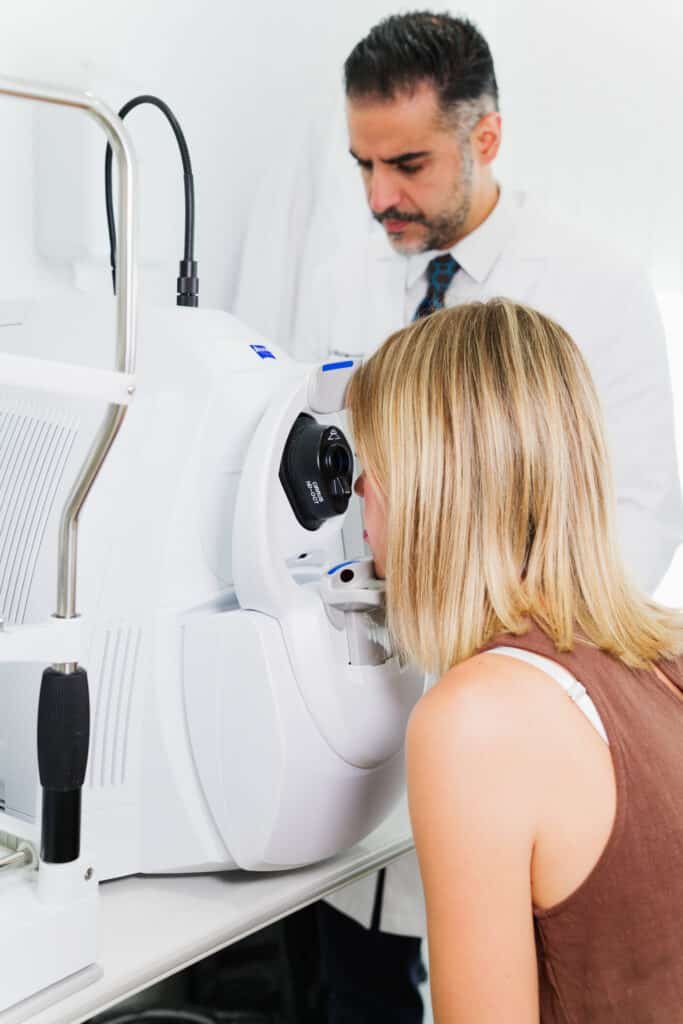
Which tests should be done before refractive surgery?
Depending on the case, a modern assessment should include:
1. Full refraction
To determine the exact prescription.
2. Corneal topography and tomography
To analyse the shape, curvature and stability of the cornea.
3. Pachymetry
To measure corneal thickness.
4. Aberrometry
To assess individual optical quality.
5. Tear film assessment
An unhealthy ocular surface can affect both the measurements and the visual outcome.
6. Pupil assessment
Particularly important for patients who are concerned about night vision.
7. Epithelial thickness mapping
When indicated, it can provide additional information about the cornea.
8. Assessment of prescription stability
9. Corneal risk analysis
With all this information, the most appropriate technique can be selected.
Frequently asked questions about refractive surgery
What is the best laser for correcting myopia?
There is no single laser that is best for everyone. SMILE pro, Femto-LASIK, TransPRK and personalised excimer laser treatments can be excellent options depending on the patient’s characteristics.
Is SMILE pro better than LASIK?
Not necessarily. SMILE pro has important advantages and can be an excellent option for certain patients, but personalised LASIK or TransPRK may be preferable in other cases.
Which is better: TransPRK or SMILE pro?
They are different techniques. TransPRK is a surface technique using an excimer laser, whereas SMILE pro uses a femtosecond laser to create a lenticule. The choice depends on the cornea, the prescription and the patient’s individual characteristics.
Which is better: topography-guided or wavefront-guided treatment?
They are different technologies. The choice depends on the characteristics of the cornea and the patient’s optical aberrations.
What is the eye tracker for?
The eye tracker monitors the movements of the eye while the laser is applied and allows the treatment to adapt to the position of the eye. Advanced systems can also help compensate for torsional movements and keep the treatment correctly oriented.
Can laser surgery correct myopia and astigmatism at the same time?
Yes. In correctly selected patients, laser refractive techniques can treat myopia and astigmatism simultaneously.
Can hypermetropia be corrected with laser surgery?
Yes, in certain patients. The decision depends on the prescription, corneal anatomy, age and refractive stability.
Can presbyopia be treated with laser surgery?
There are corneal strategies for certain patients, but presbyopia requires a specific assessment. In many patients, lens-based alternatives and intraocular lenses should also be considered.
Is 100% laser surgery always better?
Not necessarily. What matters is not using a laser simply because it is an advanced technology, but using the right technology for each eye.
Is refractive surgery safe?
Modern techniques have a high safety profile when they are performed in correctly selected patients after a complete pre-operative assessment. As with any surgery, there are risks that must be explained individually before the procedure.
How long does recovery take?
It depends on the technique. Visual recovery is usually faster after LASIK and SMILE than after surface techniques such as PRK or TransPRK, although there are significant individual differences.
Can I have surgery if I have a high prescription?
Not always. When the prescription is high or the cornea does not have the right characteristics for safe laser treatment, there may be other alternatives, such as phakic intraocular lenses.
Refractive surgery in Marbella
If you are thinking about reducing your dependence on glasses or contact lenses, the first step should not be choosing a laser.
The first step should be finding out exactly what your eyes are like.
An advanced refractive assessment can determine whether you are suitable for:
LASIK · Femto-LASIK · SMILE pro · TransPRK · PRK · topography-guided · wavefront-guided · aberrometry-guided · ICL · Lens Upgrade (Refractive Lens Exchange / Lens Replacement)
The most advanced technology is the one that is used in a personalised, safe way and with the right medical indication.
In refractive surgery, the aim is not simply to achieve “zero dioptres”.
The aim is to achieve the best possible vision for each patient, while preserving the safety and health of their eyes in the long term.
Would you like to know which technique may be most suitable for your myopia, hypermetropia, astigmatism or presbyopia?
A personalised refractive assessment is the first step in determining which technology and which procedure are most suitable for your eyes.