

Age-related macular degeneration in its dry form affects 90% of patients with this pathology. For decades, that figure had a direct consequence for those who received it: there was no treatment capable of slowing its progression. In November 2024, the U.S. FDA authorized photobiomodulation therapy as the first treatment with proven efficacy to improve visual acuity in dry AMD. In Europe, approval came earlier: the CE mark was granted in 2019.
In the Dr. Ali Nowrouzi's retina clinic in Marbella, the study of the macula is part of the diagnostic protocol from the first visit. Understanding what photobiomodulation is, what the scientific evidence says, and when it is indicated allows patients with dry AMD to make informed decisions together with their ophthalmologist.
What is age-related macular degeneration
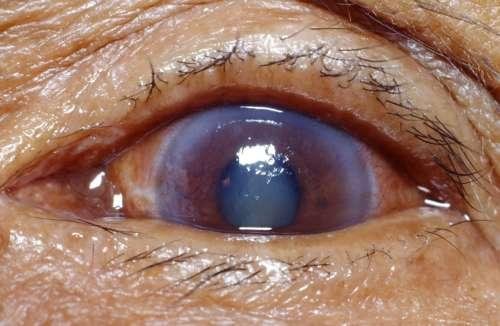
The macula is the central area of the retina. It concentrates the photoreceptors responsible for fine vision: reading, recognizing faces, driving, distinguishing colors. When it deteriorates, central vision is progressively and irreversibly lost, without peripheral vision being able to fully compensate for it.
AMD is the leading cause of legal blindness in people over 55 in developed countries. The World Health Organization estimates that more than 196 million people worldwide are affected by some form of macular degeneration, and predicts that this number will exceed 288 million by 2040 as the global population ages.
Early detection makes the clinical difference. If you notice loss or distortion of central vision in one or both eyes, it is important to undergo a complete retinal evaluation without delay.
Dry AMD and wet AMD: how they differ
AMD takes two forms depending on its mechanism of damage.
The Dry AMD (non-exudative or atrophic) is the most common. It is characterized by the accumulation of drusen, which are deposits of extracellular material under the retinal pigment epithelium, and by the gradual degeneration of the cells in that layer. It progresses slowly, through stages: early, intermediate, and advanced.
The Wet AMD (exudative or neovascular) occurs in a smaller percentage of patients, but causes faster vision loss. Its mechanism involves the growth of abnormal blood vessels under the retina, which can leak fluid and bleed. This form has an established treatment: intravitreal injections of antiangiogenic anti-VEGF drugs, which Dr. Nowrouzi applies in indicated cases within his retina clinic.
Geographic atrophy: the critical stage to prevent
Geographic atrophy (GA) is the terminal phase of dry AMD. It involves the irreversible death of retinal pigment epithelium cells and macular photoreceptors. When this point is reached, visual damage is permanent and no current treatment reverses it.
This makes the main clinical goal in dry AMD to slow progression before geographic atrophy appears. And this is where photobiomodulation provides the most relevant data in recent years.
What is photobiomodulation and how does it act on the retina
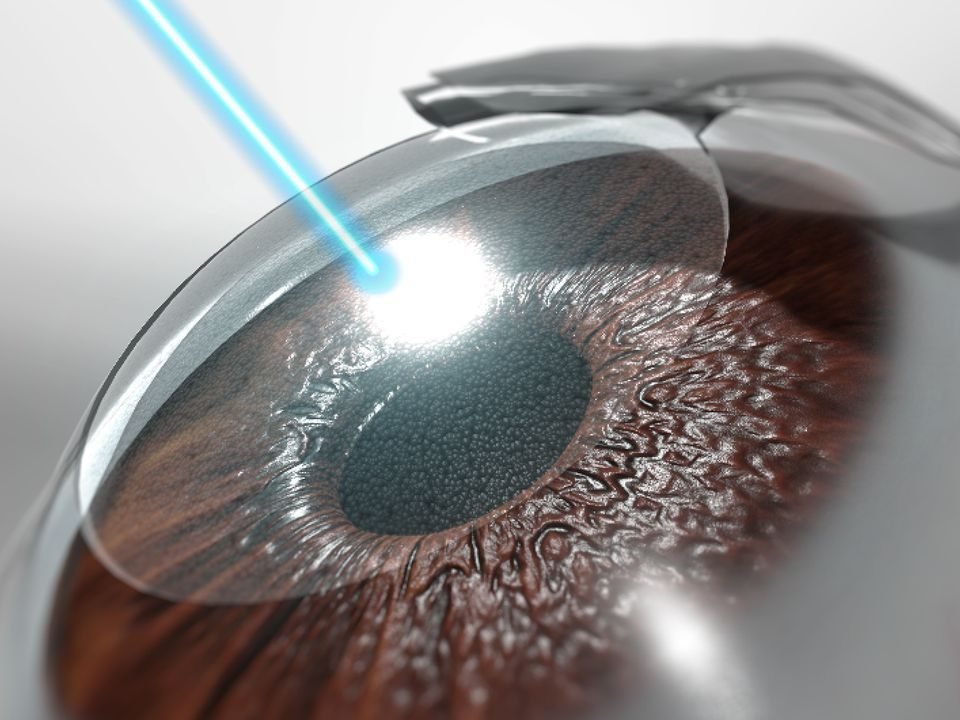
Photobiomodulation (PBM) is a therapy that uses light of specific wavelengths to stimulate the cellular metabolism of the retina. It is not a surgical laser. It does not remove tissue or destroy vessels. It is a non-invasive treatment that acts directly on the mitochondria of retinal cells.
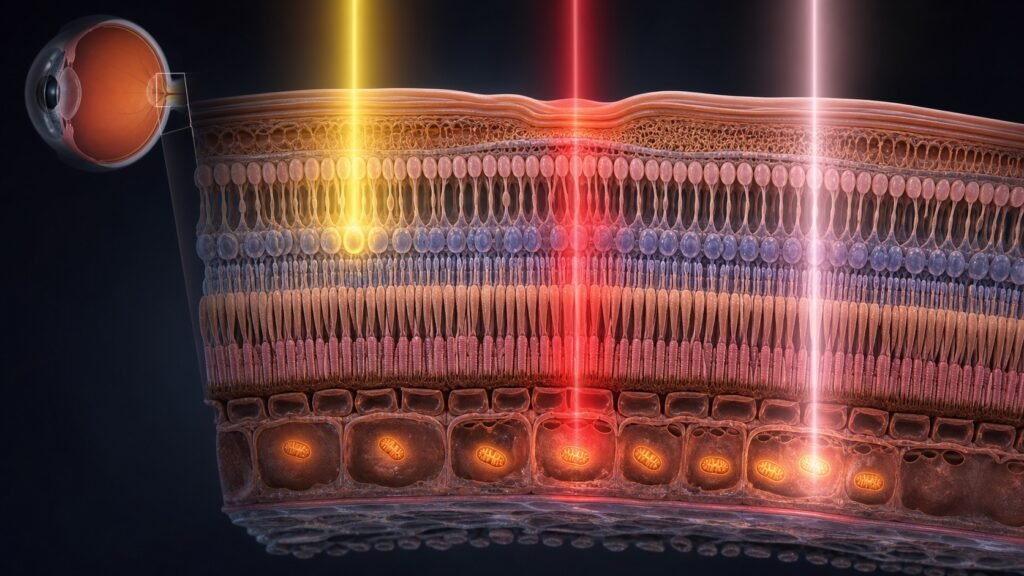
Its biological target is cytochrome c oxidase (CCO), an enzyme of the mitochondrial respiratory chain. By stimulating it with specific wavelengths of light, several simultaneous effects are triggered: increased ATP synthesis, which is the cellular energy source; reduction of intracellular oxidative stress; inhibition of pro-inflammatory pathways; stimulation of cellular repair mechanisms; and improvement of retinal pigment epithelium function.
In dry AMD, the RPE is under chronic metabolic stress. Cells accumulate byproducts of the visual cycle, including lipofuscin, and their ability to eliminate them decreases over time. Photobiomodulation acts on this mitochondrial energy deficit, attempting to restore function before cell death becomes irreversible.
Wavelengths used: 590, 660, and 850 nm
Photobiomodulation therapy applies three wavelengths simultaneously:
- 590 nm (yellow light): acts mainly on the superficial layers of the retina
- 660 nm (red light): penetrates to the RPE and photoreceptors
- 850 nm (near-infrared): reaches the deepest layers, including the choroid
This multi-wavelength combination allows treating different cell types within the same session, covering the range of tissues involved in dry AMD.
What the scientific evidence says: the LIGHTSITE III clinical trial
The level of evidence that exists today for photobiomodulation in dry AMD is not that of an experimental therapy. It comes from a randomized, placebo-controlled, double-blind clinical trial: the LIGHTSITE III study.
The trial design included 100 subjects (148 eyes) with a diagnosis of non-exudative dry AMD. Participants were randomly assigned in a 2:1 ratio to two groups: real treatment with multi-wavelength photobiomodulation (590, 660, and 850 nm), or sham treatment with intensity reduced to 1-2%. The protocol consisted of 9 sessions over 3-5 weeks, repeated every 4 months, for 24 months.
Results: improvement in visual acuity and slowing of geographic atrophy
Data at 13 months, published in the journal Retina in March 2024, showed a statistically significant difference in the primary variable of best-corrected visual acuity (BCVA): eyes treated with photobiomodulation gained an average of 5.4 letters, compared to the loss recorded in the sham group. The difference between groups was 2.4 letters (P = 0.02), according to the study available on PubMed Central.
The results at month 21 confirmed and expanded this benefit. Analysis of the pre-specified primary endpoint reached statistical significance (P = 0.0036), with a mean gain of 6.2 letters in the photobiomodulation group. 61.5% of treated eyes showed an improvement of 5 letters or more (one line on the optometric scale), and 23.1% gained 10 letters or more.
The most relevant finding from a preventive standpoint came in the 24-month analysis: in the sham group, 24.0% of eyes developed incident geographic atrophy. In the photobiomodulation-treated group, this percentage was reduced to 6.8% (P = 0.007). A relative reduction of over 70% in the risk of transition to GA, according to the 24-month results published on PubMed.
The extension of the trial, the LIGHTSITE IIIB study, followed subjects who had completed LIGHTSITE III and resumed treatment for an additional 13 months. Preliminary data published in May 2025 showed that over 60% of subjects continued to maintain a visual benefit of more than one line of visual acuity.
Regulatory approval: Europe since 2019, FDA since November 2024
Photobiomodulation treatment received the European CE mark in 2019, becoming the first approved treatment in the European Union for dry AMD. In November 2024, the FDA also authorized it in the United States, following the results of the LIGHTSITE III trial.
The American Academy of Ophthalmology, upon reviewing the trial data in 2024, noted that the results are promising as a potential disease-modifying therapy, although he emphasized that additional studies are needed to confirm its definitive long-term role. Research in this field remains active, and the 24-month data published in 2025-2026 reinforce the robustness of the benefit-risk profile.
Who is a candidate for photobiomodulation treatment
Candidate assessment is always individual and should be performed by an ophthalmologist experienced in retinal pathology. The general indication criteria are well defined based on available trials.
Stages where photobiomodulation has evidence of benefit
The treatment is indicated for patients with dry AMD in early and intermediate stages. In these stages, the RPE is under metabolic stress but the cells have not yet died massively. Patients with medium or large macular drusen, or pigmentary changes in the macula, are those most clearly included in the population studied in the trials.
The prior assessment must include at least a fundus retinography and a posterior segment OCT to document the exact stage of the disease. In Dr. Nowrouzi's practice, these ocular diagnostic tests are part of the retinal study protocol from the first visit.
Patients who have controlled wet AMD in one eye and dry AMD in the contralateral eye may also be evaluated for photobiomodulation: ongoing research exists on photobiomodulation to reduce the risk of conversion to wet AMD in the second eye.
Who does not benefit: advanced AMD with established geographic atrophy
Photobiomodulation does not repair or regenerate cells that have already died. In advanced AMD with extensive geographic atrophy, visual function is impaired by irreversible cell loss, and the treatment has no demonstrated effect in that situation.
Therefore, the most important message for patients with AMD is that early diagnosis and periodic retinal monitoring determine whether the treatment can act before the damage becomes permanent. It is not advisable to wait until severe symptoms appear to consult.
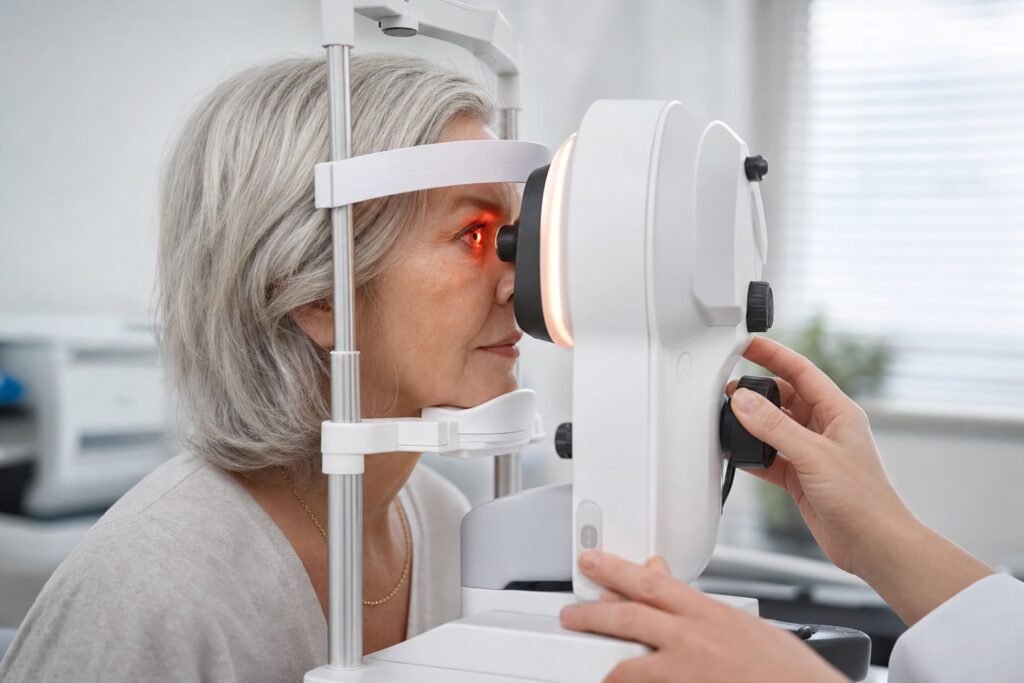
What a photobiomodulation session in the clinic is like
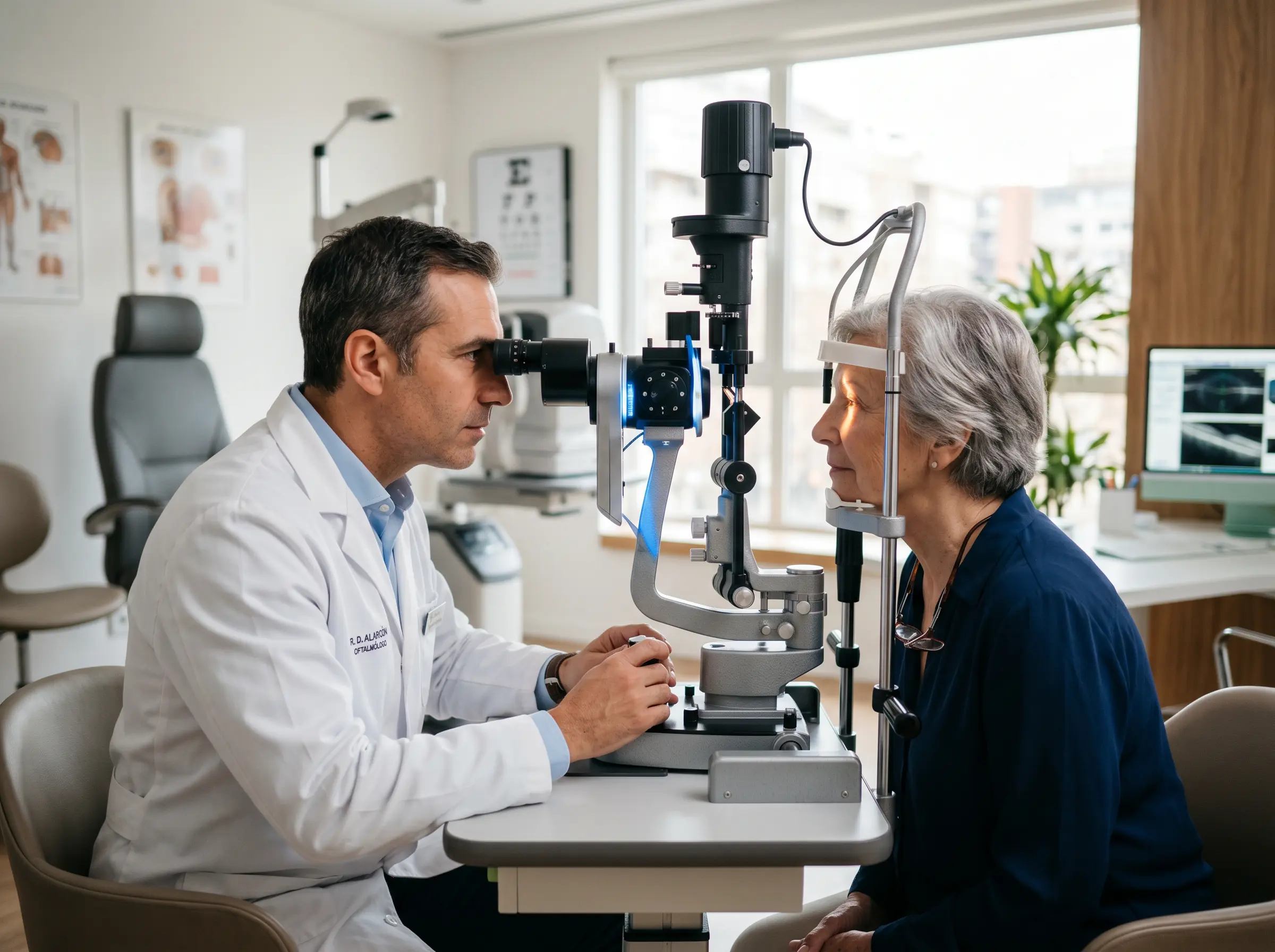
Photobiomodulation treatment is outpatient. It does not require pupil dilation, anesthesia, or an operating room. The patient sits in front of the device, and the light is applied directly through the pupil in a controlled manner.
Each session lasts between 4 and 5 minutes per eye. The standard protocol of the LIGHTSITE III trial consisted of 9 sessions distributed over 3-5 weeks (three times per week), repeated every 4 months for 2 years. The frequency and number of cycles can be adapted based on clinical evolution and findings in retinal check-ups.
During the sessions, temporary photostress may occur, a sensation of glare or need for visual adaptation for a few minutes after treatment. No serious adverse effects attributable to photobiomodulation were documented in clinical trials. It does not involve drugs and has no known interactions with the usual medication of older patients.
Patients with cataracts can receive the treatment without issue: lens opacities do not prevent the application of the device, according to available evidence from the LIGHTSITE trials themselves.
Retinal monitoring before and during treatment
Photobiomodulation does not replace periodic ophthalmological monitoring. Treatment planning and its follow-up require a rigorous diagnostic protocol to document the stage of AMD, rule out hidden exudative components, and evaluate progression between cycles.
Dr. Ali Nowrouzi, retina specialist in Marbella, uses in macular study high-resolution OCT to visualize the retinal layers and the RPE, OCT-angiography (Angio-OCT) for non-invasive study of macular vasculature without the need for contrast, fundus retinography to document the extent of drusen and pigmentary changes, and perimetry when there is suspicion of central visual field loss.
This diagnostic set allows determining the exact stage of AMD, whether there is any active wet component requiring parallel antiangiogenic treatment, and the progression between check-ups. The advanced ocular diagnostic tests are available in the same clinic, allowing all data to be obtained in a single visit without the need for additional travel.
Photobiomodulation and AMD at Dr. Ali Nowrouzi's practice in Marbella
Dr. Ali Nowrouzi is an ophthalmologist with FEBOS-CR certification (Fellow of the European Board of Ophthalmology in Refractive Surgery), recognized by Top Doctors in 2024, 2025, and 2026, and head of the Ophthalmology Department at Hospital Quirónsalud Palmones. With over 100 scientific publications in leading journals such as Journal of Refractive Surgery and Investigative Ophthalmology, his clinical practice encompasses the diagnosis and treatment of retinal pathology, including AMD monitoring and planning of individualized treatments.
The retina clinic in Marbella includes a complete diagnostic assessment to stage dry AMD, identify the optimal treatment window, and establish the most appropriate follow-up protocol for each patient.
Dr. Nowrouzi has photobiomodulation equipment in his practice, allowing treatment to be performed in the same center where diagnosis and retinal monitoring are carried out. It is not necessary to go to external centers.
If you have a diagnosis of dry AMD, a family history of macular degeneration, or have noticed changes in your central vision, you can request an appointment with Dr. Nowrouzi at his retina clinic in Marbella for a complete evaluation.
Frequently asked questions about photobiomodulation and AMD
Does photobiomodulation cure macular degeneration? No. AMD is a chronic and degenerative disease with no known cure currently. Photobiomodulation has been shown in the LIGHTSITE III trial to slow its progression, improve visual acuity in early and intermediate stages, and significantly reduce the risk of developing geographic atrophy. It does not reverse already produced cell damage.
How many sessions are needed and how often? The standard protocol derived from LIGHTSITE III consists of 9 sessions concentrated over 3-5 weeks, with treatment three times per week, repeated every 4 months. Each session lasts approximately 4-5 minutes per eye. The exact regimen may be adjusted based on clinical response and findings during periodic retinal check-ups.
Are there any side effects? The safety profile has been very favorable in all published studies. The only common effect is temporary photostress for a few minutes after each session. No serious adverse effects attributable to the treatment have been documented. It does not involve drugs and does not interact with usual systemic medication.
Does it work if I have cataracts in addition to AMD? Yes. Patients with cataracts can receive the treatment without the lens opacification preventing the device's application. An individualized assessment will determine if other conditions may influence the outcome.
For which stage of AMD is it indicated? Solid evidence supports its use in early and intermediate dry AMD. In advanced AMD with established extensive geographic atrophy, the benefit is not demonstrated because the cellular damage is already irreversible. It is not indicated for active wet AMD, which requires intravitreal injections of anti-VEGF drugs.
What differentiates photobiomodulation from injections for AMD? They are treatments for different forms of the disease. Anti-VEGF intravitreal injections are indicated for wet AMD. Photobiomodulation is approved for dry AMD, which is the most common form and, until 2019, had no approved treatment in Europe.
How do I know if I am a candidate? Diagnosis requires a complete retinal assessment with OCT and retinography to stage the disease. Candidacy is determined on an individual basis from that examination. You can request an appointment with Dr. Nowrouzi for this evaluation.
Request a retinal evaluation in Marbella with Dr. Nowrouzi
If you have a diagnosis of dry AMD, a family history of macular degeneration, or have noticed changes in central vision, an ophthalmological evaluation is the first step. The earlier the disease stage is established and follow-up is planned, the greater the options to act before damage becomes irreversible.
You can request an appointment with Dr. Ali Nowrouzi through the contact page or by calling directly at +34 651 16 94 15. The consultation takes place in Marbella, with care available in Spanish, English, and French.