
Refractive surgery has changed more in the last ten years than in the previous thirty. What at the beginning of the 2000s was reduced to correcting a prescription - and no longer relying on glasses or contact lenses - today allows much finer adjustments: treating the quality of vision, night-time sharpness, the real detail with which the eye perceives the world. The goal is no longer just to “see without glasses”, but to see well, in real conditions, for years.
This difference is what we call in consultation new generation refractive surgery. It is not a slogan: it is the combination of technologies that have arrived in the operating theatre in recent years that have rewritten what is now considered a good result.
This guide explains what is behind this change, what techniques exist today, how to decide who is a candidate and what is really facing someone who is considering such an intervention in Marbella or in any centre with up to date technology.
From classical refractive surgery to the new generation
Classic refractive surgery - LASIK with microkeratome, PRK in the 1990s and early 2000s - solved the basic problem: the patient's prescription was measured, the cornea was flattened to a standard pattern and, in most cases, the patient ended up seeing well. Success was measured by whether or not the glasses were removed.
It was a good starting point, but it had limitations. Surgery corrected myopia, farsightedness y astigmatism The optical peculiarities of each eye were not taken into account in a standardised way. Two patients with the same prescription received exactly the same treatment, even though their corneas and internal aberrations were very different. The result was often correct, but not always optimal: night vision with halos, a feeling of loss of sharpness in twilight, contrast sensitivity below what a good lens would give.
What has changed in the last decade is not the idea - we still reshape the cornea with lasers - but the precision and customisation. Today it is possible to map the eye point by point, identify the aberrations that affect each individual patient and design a unique treatment for that cornea. Surgery is no longer a standard template, but a customised procedure.
What defines the new generation of refractive surgery?
The new generation is not a specific technique, but the sum of several developments that together change the outcome.
State-of-the-art excimer laser
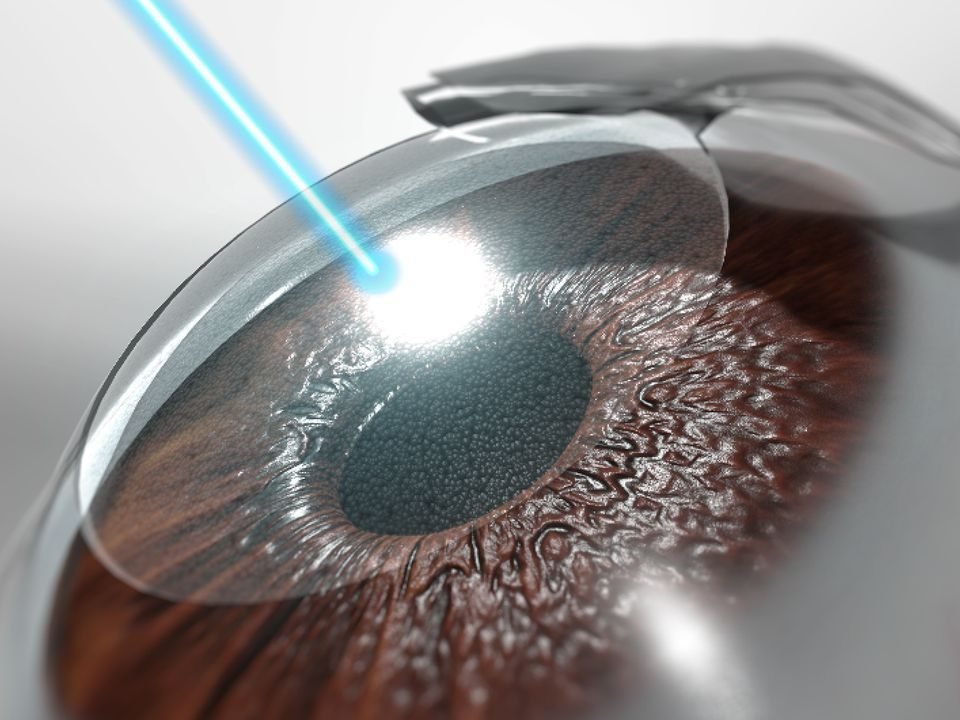
Excimer is the laser that reshapes the cornea. Current platforms work at much higher frequencies and with eye-tracking systems.eye tracking- that adjust the triggering to the eye movement in milliseconds. This reduces the margin of error and allows for faster and more predictable treatments.
Femtosecond laser (FemtoLASIK)
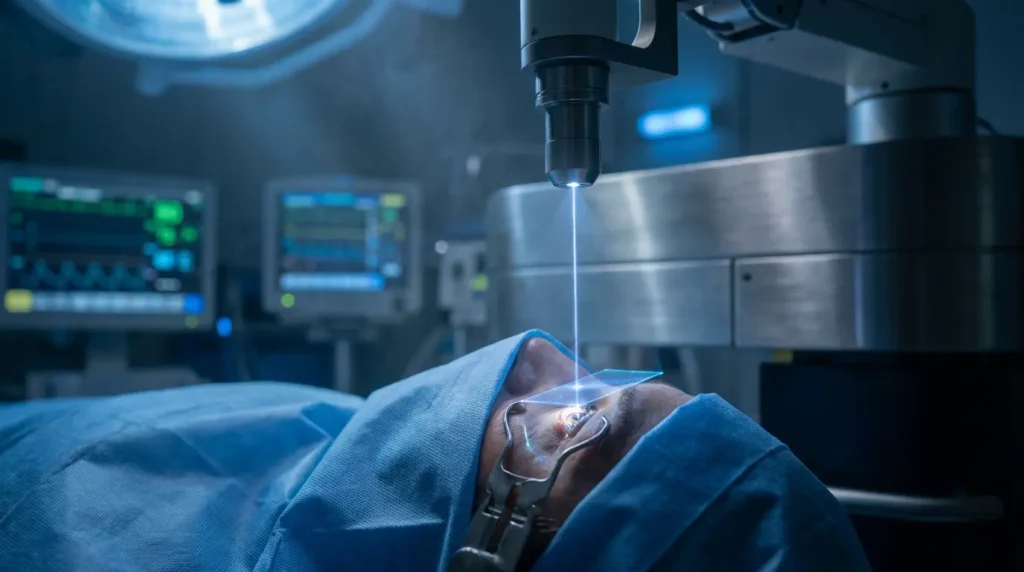
In classic LASIK surgery, the surgeon lifted a thin disc of cornea with a mechanical blade called a microkeratome. The femtosecond laser replaces this blade: it cuts with pulses of light lasting less than a billionth of a second. The precision is in microns, not tenths of a millimetre. We will come back to this in its own section, because it is one of the most relevant differences between what was done before and what is done now.
Personalised treatments wavefront-optimised
Wavefront technology analyses how light passes through a patient's eye. Each eye has a unique pattern of small optical distortions - higher-order aberrations - that no conventional prescription test detects. A wavefront-optimised treatment incorporates that information into the laser design, which especially improves the quality of vision in low light conditions.
Corneal topography-guided surgery (topography-guided)
Topography measures the exact shape of the cornea, point by point. In topography-guided surgery, that information is translated directly into the treatment pattern. It is especially useful in irregular corneas or in patients with previous surgeries, where a standard treatment would not work well.
When these four technologies work together on the same patient, the surgery is no longer a dioptre correction but an optimisation of the entire ocular optical system.
Beyond graduation: higher-order aberrations
This is probably the most misunderstood part of refractive surgery, and the part that differs the most between old and new refractive surgery.
When we talk about “prescription”, we refer to three basic defects: myopia, hyperopia and astigmatism. These are the lower order aberrations. A conventional refraction detects them and glasses correct them.
But the eye also has a number of subtler optical imperfections - coma, spherical aberration, trefoil - known as higher order aberrations. They are not covered by any standard spectacle lens. They are responsible for phenomena such as seeing halos around lights at night, glare when driving with headlights or streetlights in front, loss of sharpness in semi-darkness, difficulty in focusing on screens after a long day.
Classic refractive surgery not only did not correct them: in some cases it made them worse, because by altering the cornea without taking into account the patient's individual optical pattern, it could generate new aberrations. This is one of the reasons why patients operated on with older techniques sometimes complained of “seeing well in the light, but not seeing well” in other conditions.
The new generation surgery, by measuring and treating higher order aberrations, does not simply replace glasses: in many cases it gives a qualitatively better vision than the patient had with his best corrective lenses.
FemtoLASIK vs. microkeratome: the key technical leap forward
The move from the microkeratome to the femtosecond laser is probably the most significant change in safety and precision that refractive surgery has seen.
The microkeratome was a high-speed oscillating blade which cut a flap (flap) on the surface of the cornea. It worked well in most cases, but introduced variability: flap thickness depended on pressure, blade quality and other factors that were difficult to control 100%. And while serious complications were rare, when they did occur - incomplete cuts, irregular flaps - they were more complex to manage.
The femtosecond laser works with light, not metal. It programmes the thickness, diameter and angle of the flap with micrometric precision, creating it with thousands of microbubbles of plasma at the exact depth indicated. The surgeon is no longer dependent on a mechanical instrument, but controls the cutting directly from the laser's computer.
In practice, this translates into thinner and more uniform flaps, less risk of intraoperative complications, better healing and more predictable results. It also makes it possible to operate more safely on thin corneas or corneas with anatomical features that would have been contraindicated with a microkeratome.
Some centres, mainly for investment reasons, continue to use microkeratomes. This is legitimate and the technique works, but in 2026 it represents a generation ago. If you are considering refractive surgery, it is reasonable to ask what system the centre uses: the answer is part of the information you need to decide.
Comparison: classic versus new generation refractive surgery
Having seen the technical components, it is useful to summarise what these differences mean for the patient. The following table compares, in clinical terms, what the previous generation offered and what the current generation offers.
| Feature | Classic surgery | New generation |
| Treatment design | Standard, based on graduation | Customised from the individual optical map |
| Cutting technology (LASIK) | Microkeratome (mechanical blade) | Femtosecond laser |
| Ablation platform | Conventional excimer | State-of-the-art excimer with eye tracking |
| High order aberrations | They were not about | Measured and corrected (wavefront / topography-guided) |
| Pre-operative study | Refraction and basic topography | Topography, pachymetry, aberrometry, scotopic pupil, corneal biomechanics |
| Predictability of outcome | Media | High |
| Night vision quality | Limited (halos, frequent glare) | Considerably improved |
| Potential vision | Up to 20/20 in most cases | Up to 20/15-20/12 in selected patients |
The difference, read as a whole, is not in any one technology, but in how they are all combined: finer measurement, customised planning, more precise instruments.
Types of refractive surgery available today
Not all patients are candidates for the same technique. The choice depends on prescription, cornea, age and other factors.
| Technique | Main indication | Indicative maximum graduation | Recovery | When it is recommended |
| FemtoLASIK | Myopia, hyperopia, astigmatism | Up to -10 / +5 / 6 ast. | 24-48 h | First choice in most patients |
| PRK / LASEK | Myopia, hyperopia, astigmatism | Up to -8 / +4 / 5 ast. | 4-7 days with discomfort | Thin corneas, professions at risk of eye impact |
| SMILE | Myopia and myopic astigmatism | Up to -10 / 5 ast. | 24-72 h | Patients with dry eye or sporty lifestyle |
| ICL (phakic lens) | High myopia, high hypermetropia | No strict limit | 24-48 h | When the cornea does not allow laser surgery |
In consultation, the final decision is not made by the prescription: it is made by the combination of preoperative tests. A patient with moderate myopia but a thin cornea may be a better candidate for PRK or ICL than FemtoLASIK, although their prescription would fit all three.
How the surgery is performed step by step
The surgical procedure is only part of the process. What most determines the outcome is what happens beforehand.
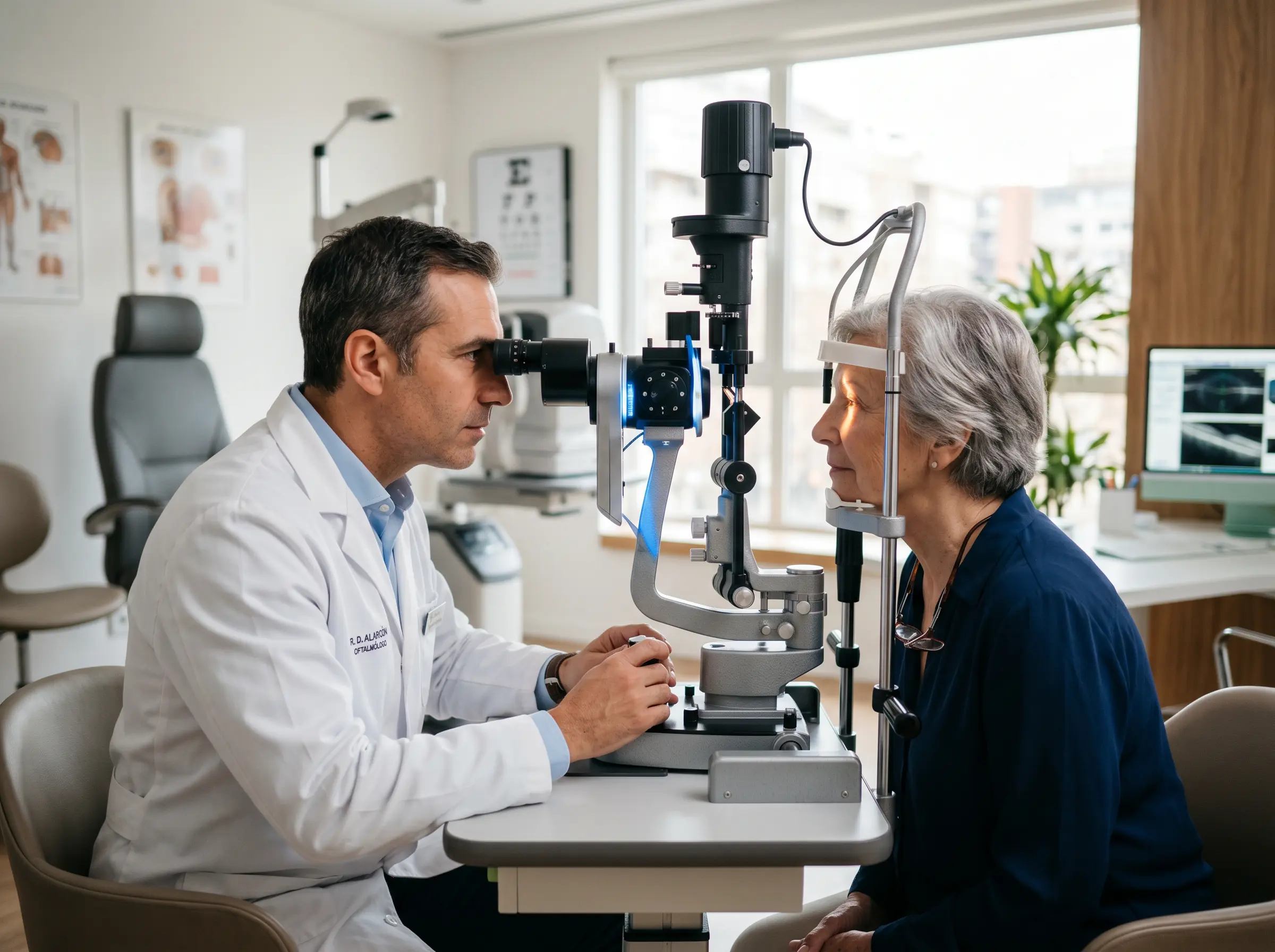
Pre-operative study. This is the most important consultation in the whole process, and the one that differentiates a good centre from a poor one. A complete assessment includes corneal topography, pachymetry (corneal thickness), aberrometry (aberration mapping), scotopic pupil measurement (in low light conditions), ocular surface assessment and fundus study. Without all these tests, new generation surgery cannot be properly planned.
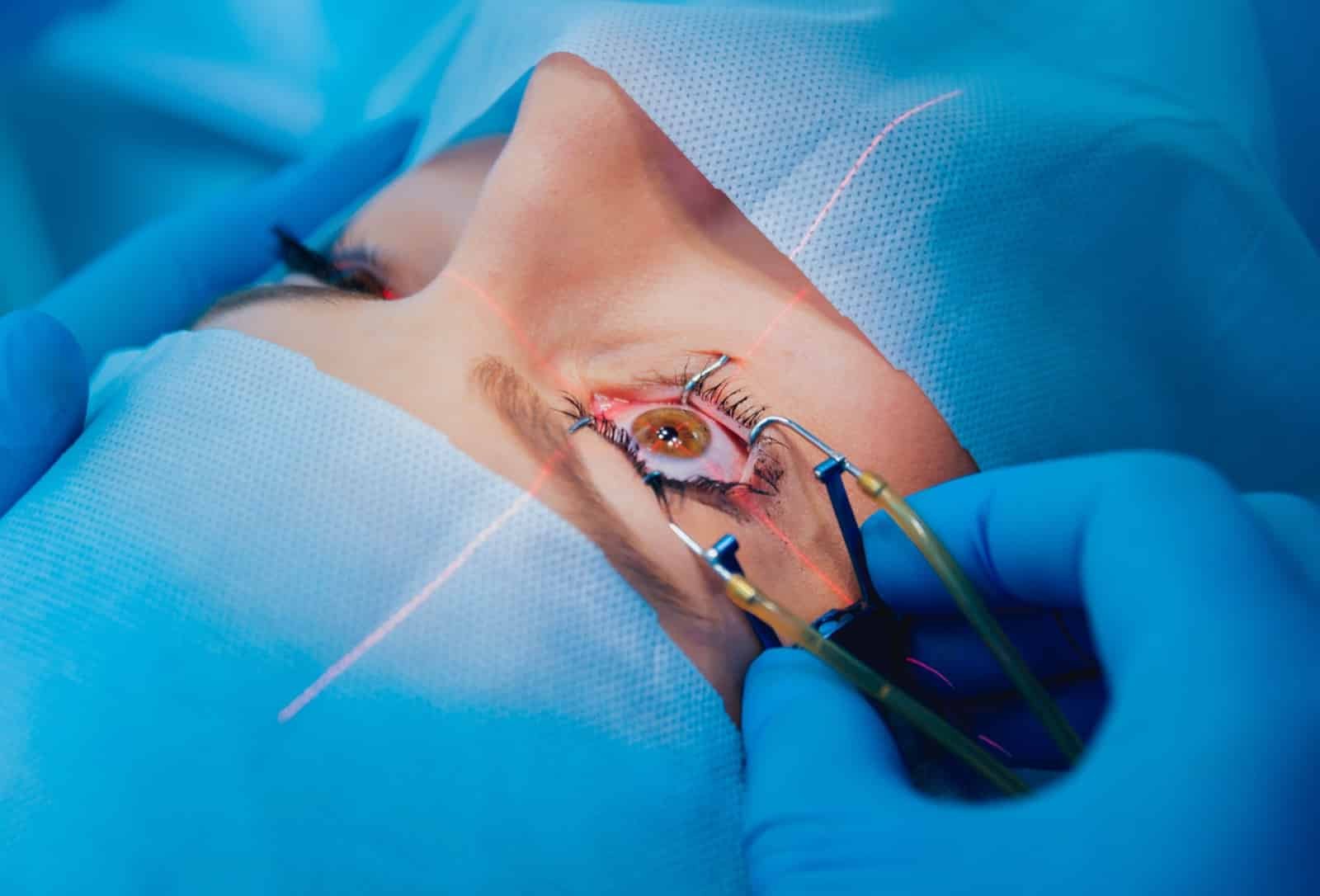
The day of surgery. The procedure takes about 10-15 minutes per eye. It is performed under topical anaesthesia - drops, not injections. The patient is awake, lying down, and is asked to look at a fixation light. No pain is felt: at most, a slight pressure for a few seconds. The active part of the laser on the cornea takes just 20-40 seconds per eye, depending on the prescription.
Immediate postoperative period. After surgery, the patient waits a few minutes in the recovery room and walks home. Vision is blurred for the first few hours and there is often a foreign body sensation or tearing. Almost all patients see with reasonable clarity the next morning.
Am I a candidate for refractive surgery?
Candidacy is not decided by the patient's wish or by the prescription: it is decided by the examination. The new generation of surgery widens the range of candidates considerably compared to a decade ago, but it does not make everyone a candidate.
General favourable criteriaMinimum age 21 years (some selected cases from 18), stable prescription for at least one year, adequate corneal thickness for the technique considered, normal general ocular health and realistic expectations.
Who is not a candidate, or who requires special precautionsPatients with keratoconus or suspected corneal ectasia, pregnant or breastfeeding women (not because of risk, but because of refractive instability), active autoimmune diseases, severe uncompensated dry eye, corneas that are too thin for the indicated technique, or patients with expectations that do not fit with what the surgery can offer.
A good pre-operative consultation detects these cases and, when surgery is not the best option, says so. Operating on a patient who is not a suitable candidate is the main cause of poor long-term results.
Risks, side effects and real limitations
All surgery has risks. Modern refractive surgery is one of the safest procedures available, but to ignore the limitations would be dishonest.
Transient dry eyeThe most common. It appears in a significant percentage of patients during the first weeks or months, especially in LASIK, and usually resolves with artificial tears. In most cases it is self-limiting.
Halos and night glareThe risk of developing a large scotopic pupil is much lower than with older techniques, thanks to personalised treatments, but it can occur especially in the first postoperative months. A large scotopic pupil is a risk factor, which is why it is always measured before surgery.
Under- or over-correctionIn some cases the result falls short or goes slightly too far. It is usually treatable with a second intervention - retouching - once the refraction has stabilised.
Refractive regressionOver the years, a small proportion of patients regain some of their original prescription. It is usually mild and manageable.
Corneal ectasiaA rare but serious complication, in which the cornea becomes progressively deformed after surgery. Current preoperative screening technology - topography, pachymetry, biomechanical analysis - has drastically reduced its incidence, identifying earlier the cases in which laser surgery should not be performed.
The complete preoperative study is what most reduces all these risks. Not the brand of laser, not the centre: the depth and rigour of the assessment.
Recovery: what to expect on a day-to-day basis
Visual recovery and functional recovery do not go at the same pace, and it is important to be clear about this.
First 24 hours. Blurred vision, tearing, slight stinging or foreign body sensation. Several hours of sleep is recommended as soon as you get home. Visual improvement is usually noticeable upon awakening.
First week. Functional vision - you can read, see screens, drive during the day - in most patients operated on with FemtoLASIK from the second or third day. In PRK, recovery is slower: 4 to 7 days with blurred vision. Swimming pools, dust, make-up and contact sports are avoided.
First month. Progressive stabilisation of vision. Fluctuations may appear throughout the day and a slight sensation of dry eye. Gradual return to normal activity.
Three to six months. Virtually definitive refractive result. Vision has stabilised, minor side effects have disappeared in most patients.
Outcomes of the new generation: what vision is really possible?
It is useful to discuss what the visual acuity figures mean in practice.
20/20 is the standard for “normal” vision: it is the vision that is considered correct for getting a driving licence, reading a book at a normal distance, or working without problems. 20/15 means seeing at 133%, 20/12 at 150%. These are values that exist physically - some people have them naturally - and with classic refractive surgery they were exceptional.
With current wavefront-optimised and topography-guided treatments, a significant proportion of patients achieve visions above 20/20. Cases of 20/15 or even better are not common in absolute terms, but occur regularly in selected patients with suitable corneas and treatable aberrations.
It is important to say that not every patient achieves this level, and promising it to someone before scanning their eye is a bad sign. What can be said on a clinical basis is that the ceiling of vision offered by modern surgery is higher than that offered by the previous generation.
Technology and experience: why both matter
A state-of-the-art laser platform in the hands of an inexperienced surgeon gives worse results than a well-managed older platform. Technology is necessary but not sufficient.
What qualifies a refractive surgeon in Europe combines several things. Main or exclusive dedication to this type of surgery, not occasional volume within a general practice. Accumulated surgical volume: more than a thousand surgeries as a reasonable minimum benchmark of experience in complex patients. Specific international training. And recognised certifications.
One of the most stringent accreditations in this field is the FEBOS-CR (Fellow of the European Board of Ophthalmology - Cataract and Refractive Surgery), awarded by the European Board of Ophthalmology after a rigorous examination and validation of clinical practice. The distinction is held by a small number of ophthalmologists in Europe and is a guarantee of specific competence in this type of surgery.
Added to this is the weight of the preoperative study. The difference between a good and a bad long-term result is largely decided there, before touching the laser.
What to ask before you have surgery: five key questions
An honest conversation with the centre before surgery is worth more than any brochure. These are the questions that any well-informed patient should be able to ask - and that a good centre should be able to answer straight away.
1. Is LASIK surgery performed with femtosecond laser or with a microkeratome? It defines the technological generation of the centre. Today the standard is femtosecond.
2. Is the treatment personalised (wavefront-optimised or topography-guided) or standard? It makes the difference between correcting graduation and optimising overall visual quality.
3. What exactly are the tests included in the preoperative study? A serious assessment includes at least topography, pachymetry, aberrometry, scotopic pupil and corneal biomechanics. If the study is reduced to a refraction, there is a lack of information.
4. Who is going to operate on me and how many refractive surgeries have you performed? The name of the surgeon and his or her specific refractive experience are information that the patient has a right to know before deciding.
5. What happens if my result is not optimal? How the centre manages undercorrections, touch-ups or complications is part of the quality of care. A clear answer here is a good sign.
Frequently asked questions about new generation refractive surgery
What is the real difference between classic LASIK and FemtoLASIK? The technique is essentially the same: both reshape the cornea with excimer laser after lifting a flap. The difference is in how the flap is made. Classic LASIK uses a mechanical blade (microkeratome); FemtoLASIK uses a femtosecond laser, with greater precision and predictability.
What is the femtosecond laser? A laser that emits pulses of light with a duration of less than a billionth of a second. Its clinically relevant feature is that it allows tissue to be cut with micron precision without damaging the surrounding area.
Why do some centres still use a microkeratome? Mainly because of investment. Femtosecond equipment is significantly more expensive to purchase and maintain. The microkeratome technique works, but it is an older generation of technology.
What does it mean for a treatment to be “customised” or wavefront-guided? That the laser pattern is designed from the individual optical map of the patient's eye, not from a standard model. It treats higher order aberrations in addition to the basic prescription.
Does the surgery hurt? Not during the operation. The eyes are anaesthetised with eye drops and the patient feels at most a brief pressure. In the hours that follow, there may be a stinging or foreign body sensation, which can be controlled with oral analgesia.
How long does the operation take? Between 10 and 15 minutes per eye. The active part of the laser on the cornea is between 20 and 40 seconds.
Is it forever? The correction made to the cornea is permanent. But the eye continues to age: presbyopia (eyestrain) appears around the age of 45, regardless of whether or not it was operated on before. Some patients also experience a slight regression over the years, generally mild.
What if I blink during surgery? A device gently holds the eyelids open. In addition, modern lasers have eye-tracking systems that detect any movement and auto-pause if necessary, resuming exactly where they left off.
At what age can surgery be performed? The usual minimum age is 21 years, with a stable prescription for at least one year. The upper limit depends on the condition of the eye: above the age of 50, an assessment is made as to whether corneal refractive surgery or crystalline lens surgery with an intraocular lens is appropriate.
Can presbyopia also be operated on? Yes, there are specific options: laser monovision, multifocal intraocular lenses and pseudo comfort lenses. The choice depends on age, prescription and lifestyle.
About Dr. Ali Nowrouzi
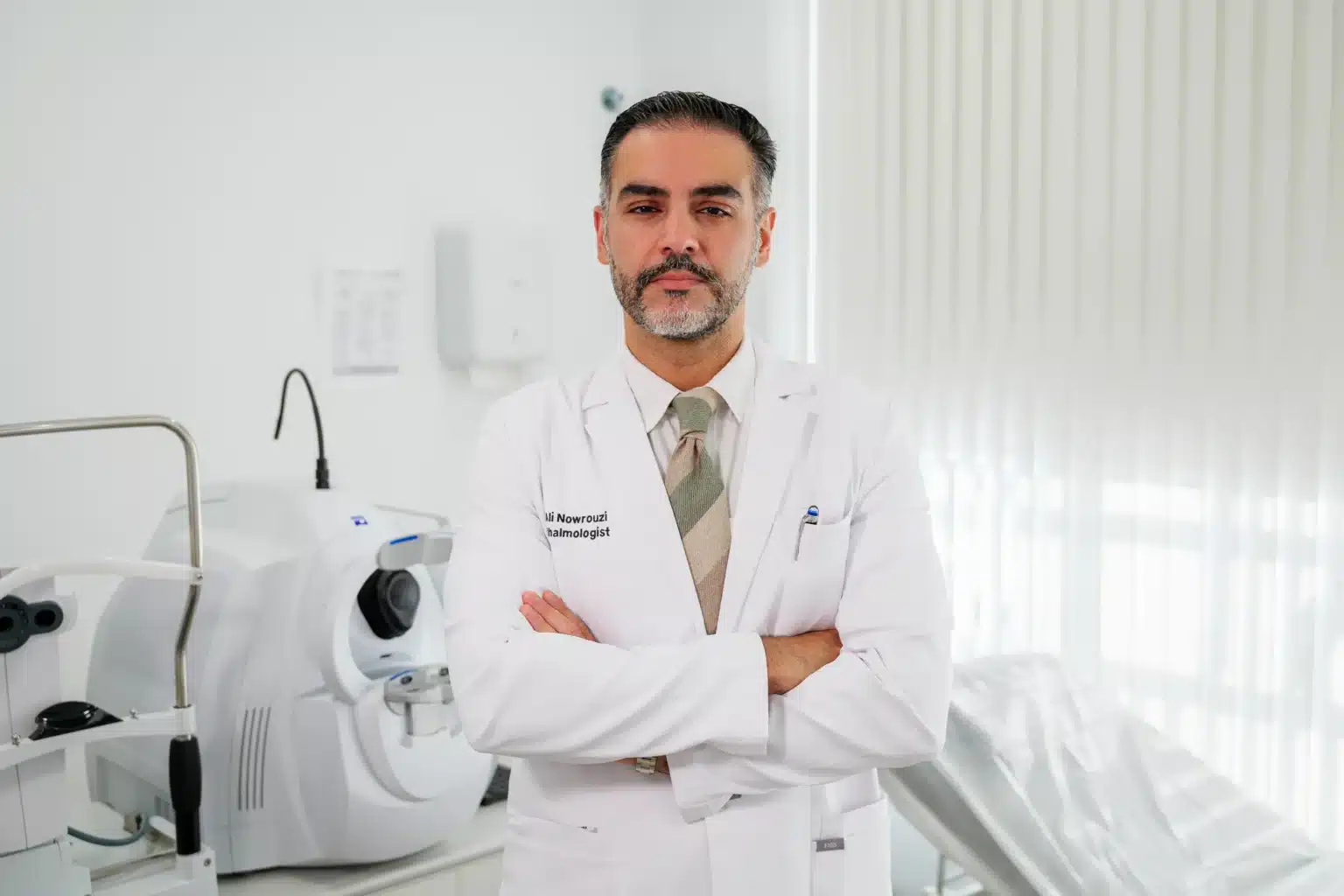
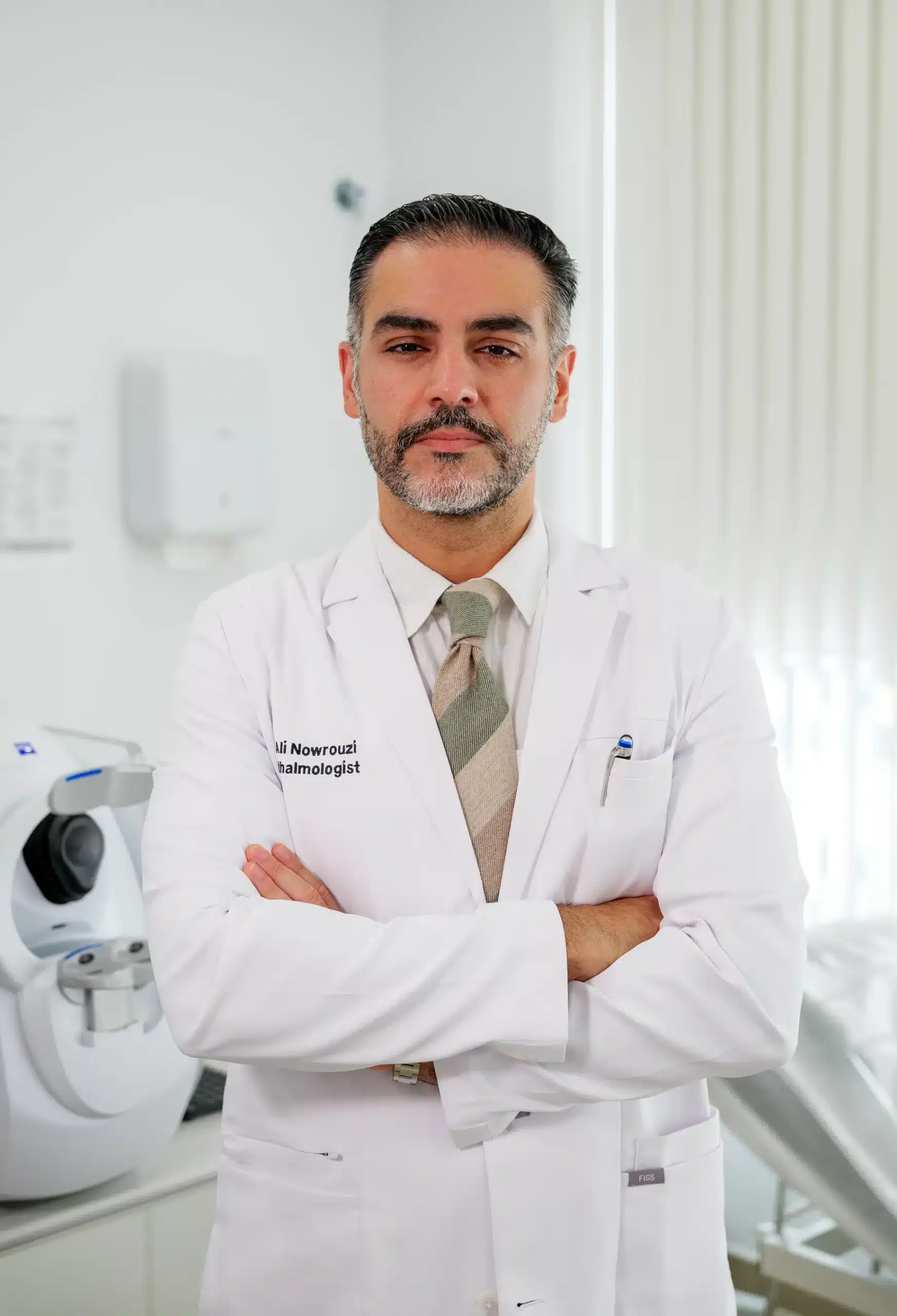
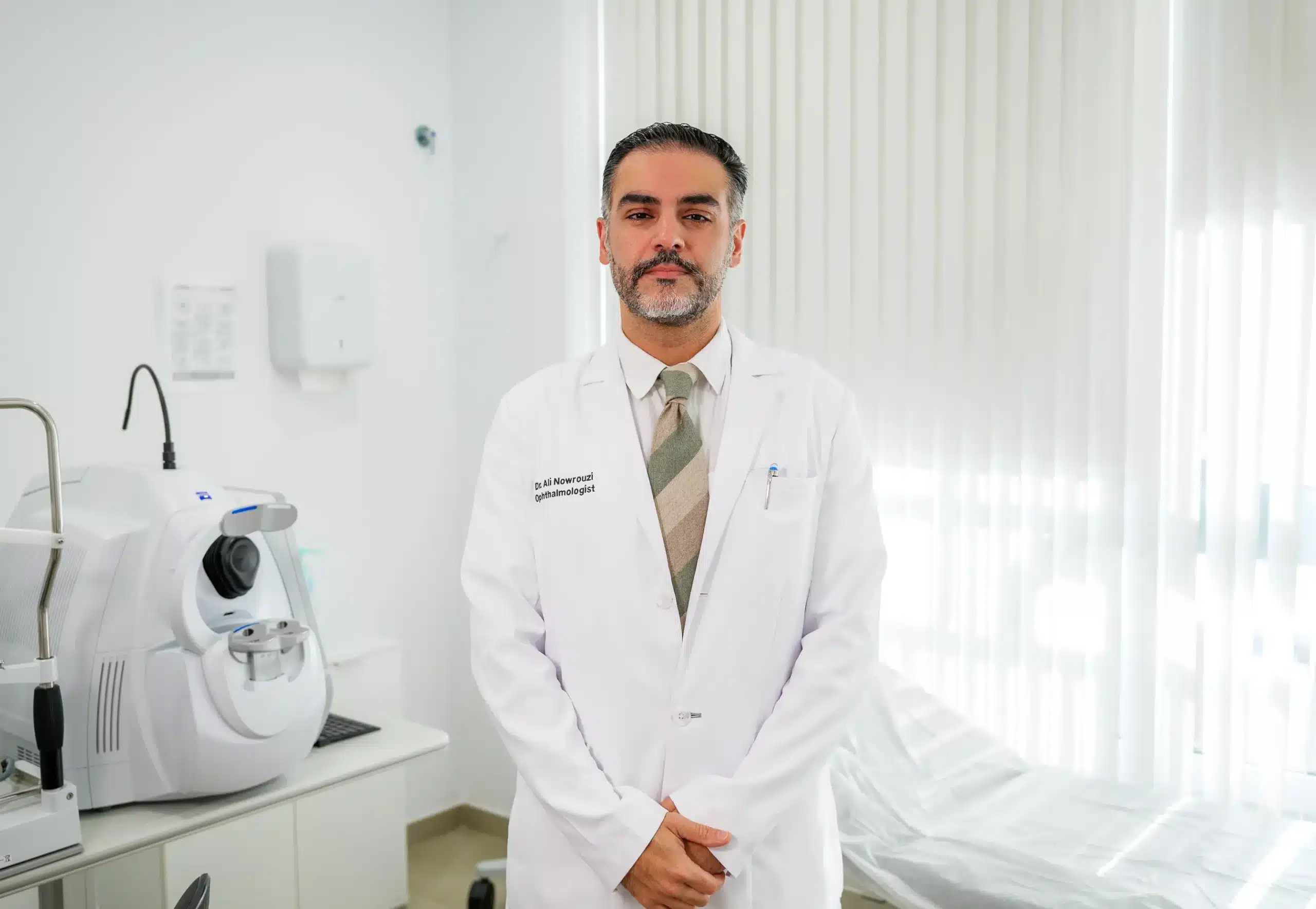
Dr. Ali Nowrouzi is an ophthalmologist specialising in refractive and cataract surgery, with a practice in Marbella. He is accredited FEBOS-CR of the European Board of Ophthalmology, international training in advanced refractive surgery and a surgical volume that far exceeds the benchmark figures in the field.
His practice focuses on this type of surgery and the detailed pre-operative work-up, which is the basis for long-term results. For more information on his career, please see the specialist page.
If you are considering refractive surgery, the most useful thing you can do is to have a personalised assessment with a specialist who will examine your corneas, your prescription and your specific expectations. New generation surgery changes what is possible, but the decision still depends on your individual case. You can request a no-obligation initial assessment