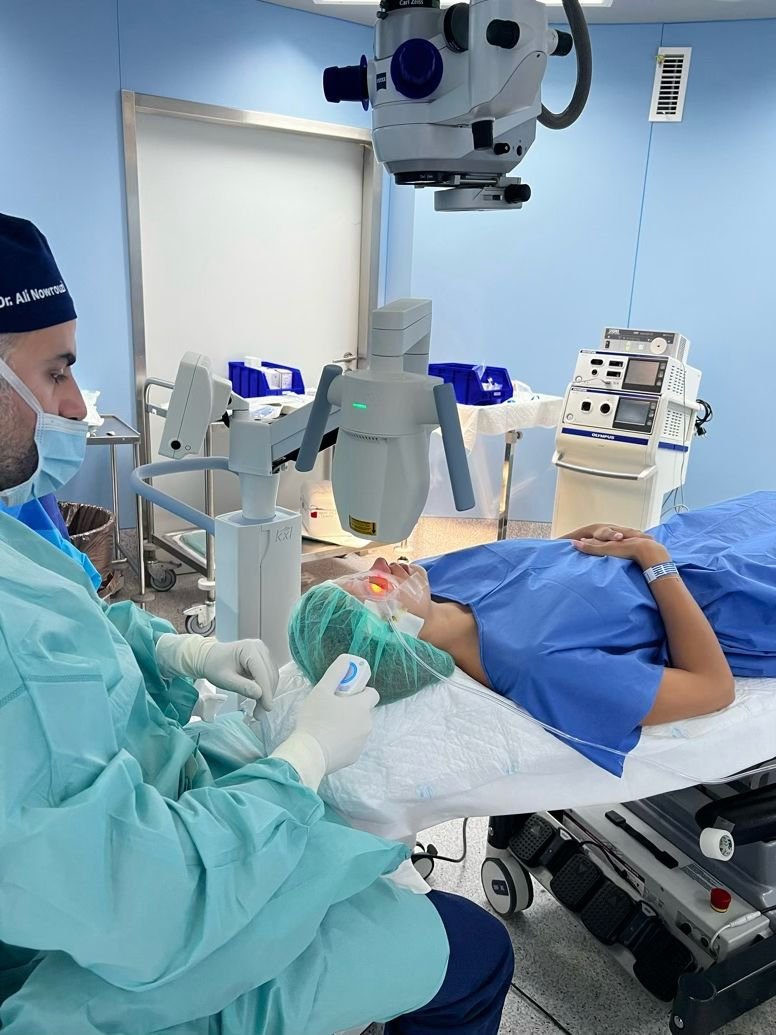

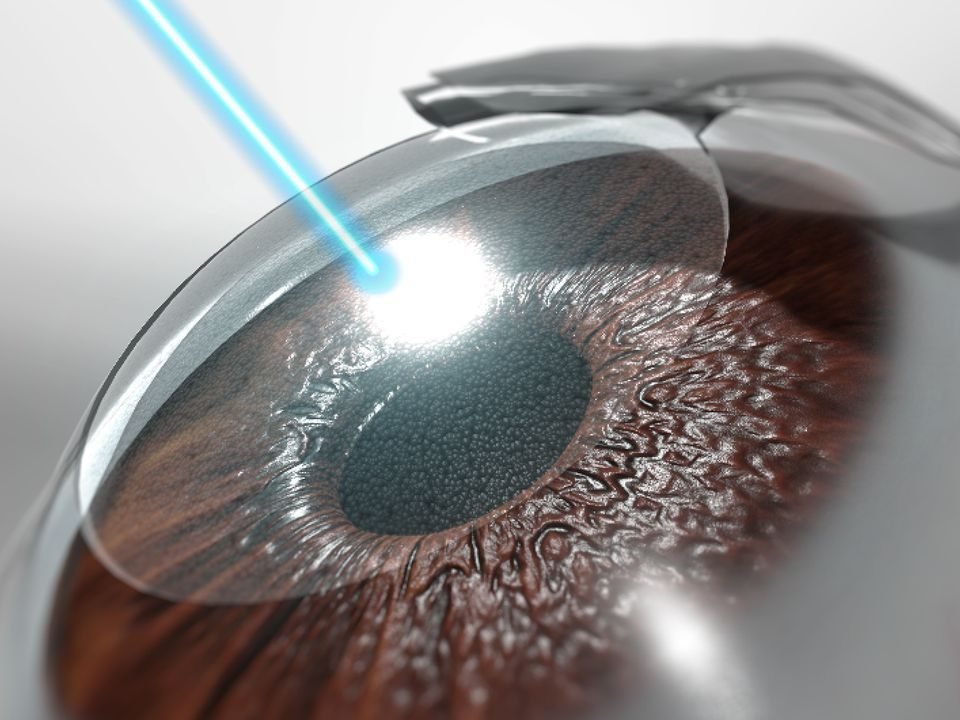

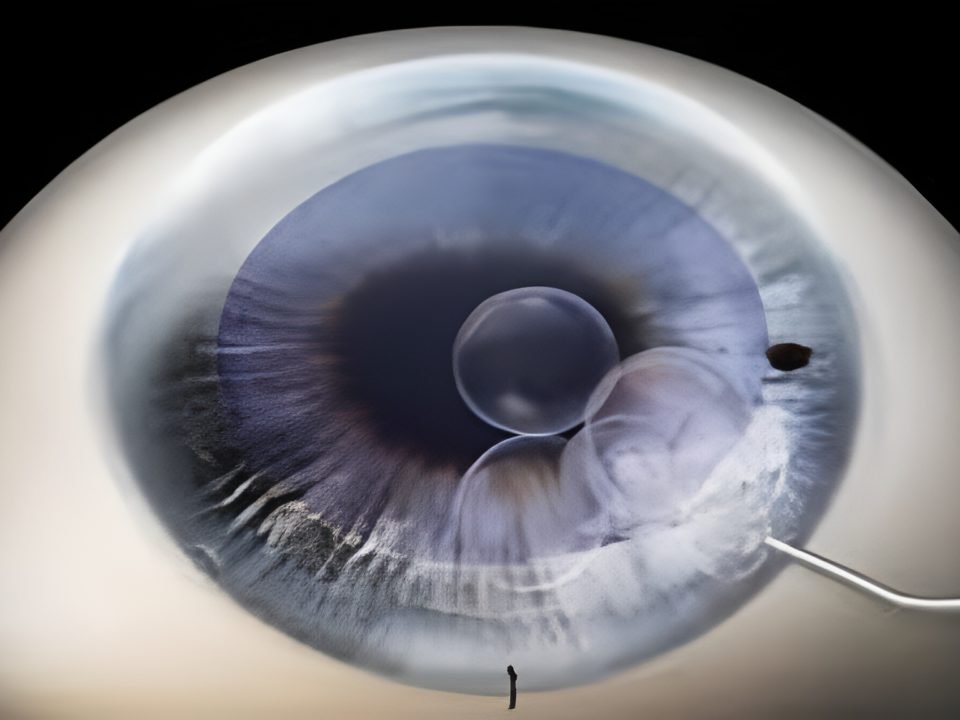


If you are thinking of undergoing a eye surgery in Marbella, It is normal that this is one of your main doubts: Will I feel pain during the operation?
The response, in most cases, is reassuring: modern eye surgery is often virtually painless. In both procedures and LASIK as in the implementation of intraocular lenses, The patient usually feels no pain during the procedure.
Rather than pain, what you may notice are brief, mild sensations, such as slight pressure, a slight sensation of manipulation, or momentary visual changes while the procedure is being performed. These are normal, controlled sensations of very short duration.
This is possible thanks to the use of topical anaesthesia drops, advanced techniques and a correct surgical indication according to the characteristics of each eye.
Today's eye surgery is designed to be comfortable, accurate and safe.
The refractive surgery has evolved dramatically in recent years. Today we can correct myopia, farsightedness, astigmatism y presbyopia with highly accurate, personalised procedures designed to provide a comfortable experience from the very beginning.
When the technique is well indicated and the treatment is adapted to the visual needs of each patient, the experience is often much simpler than many people imagine before undergoing surgery.
What anaesthesia is used in eye surgery
One of the most common questions is whether general anaesthesia is required for eye surgery. In the vast majority of cases, it is not.
Both in laser eye surgery as in procedures with premium intraocular lenses, Most often, a very comfortable and safe combination is used, which allows the patient to be at ease during the entire procedure.
Topical anaesthetic drops
The most commonly used anaesthesia in refractive surgery is topical anaesthesia, applied by drops directly to the eye shortly before surgery.
This type of anaesthesia allows:
- Blocking the sensation of pain
- Acting quickly
- Avoid injections
- Make the procedure more comfortable and less invasive
The patient remains awake, but the eye is anaesthetised and prepared so that the surgery is well tolerated.

Mild sedation to reduce anxiety
In many cases, a light oral sedation is also administered before entering the operating theatre. This is not a general anaesthetic, but an aid to reduce nervousness and promote a more relaxed experience.
This sedation helps to:
- Reducing pre-anxiety
- To promote peace of mind during the procedure
- Make the experience more comfortable
What does the operation really feel like?
During surgery LASIK, SMILE or with intraocular lenses, pain is not usually present.
What is noticeable at times is:
- Light pressure
- Brief sensation of manipulation
- Intense lights or flashes
- Temporary visual changes during the procedure
These sensations are completely normal and usually last only a short time. In addition, the patient is guided step-by-step throughout the procedure so that he or she knows what is happening at all times.
Simply put, it is not usually a painful experience, but a brief experience, unlike any other, but perfectly tolerable.
Does LASIK or intraocular lens surgery hurt more?
It is not usually a question of which technique “hurts more”, because all are designed to be performed with a high level of comfort for the patient. The choice between LASIK, SMILE, PRK or intraocular lenses depends above all on the characteristics of each case and the type of visual correction we are seeking to achieve.
When deciding on the most appropriate treatment, factors such as the following are taken into account:
- The type and degree of refractive error
- The thickness and characteristics of the cornea
- The age of the patient
- The presence of presbyopia
- The desired visual quality
- The most appropriate medical indication
Therefore, the decision should not focus on which technique hurts less, but on which can offer better visual quality, more safety and a more stable long-term result.
What is recovery like after eye surgery?
After eye surgery, it is normal to experience some mild discomfort during the first few hours or during the first day. This is part of the normal recovery process and should not be confused with surgical pain.
The most frequent sensations are usually:
- Gritty sensation
- Slight stinging
- Tearing
- Light sensitivity
- Slightly blurred vision at first
In most cases, this discomfort is mild, temporary and improves quickly with prescribed medication and postoperative recommendations. In many procedures, visual recovery is very rapid.
If you want to find out more about how vision is restored in cases of presbyopia with intraocular lenses or in femtosecond laser cataract and presbyopia surgery, For more information, see these articles.
What discomfort is normal and when to seek advice
An important part of the postoperative period is knowing how to differentiate between expected discomfort and a sign that warrants medical review.
It is normal to notice
- Sensitive eye during the first hours
- Mild gritty discomfort
- Tearing
- Initial photophobia
- Small visual fluctuations at the beginning
It is advisable to consult as soon as possible if it appears
- Severe or increasing pain
- Sudden worsening of vision
- Increasing redness
- Abnormal discharge
- Any symptom that does not fit with the postoperative guidelines indicated
The importance of choosing a specialist in refractive surgery
Technology is important, but the surgeon's experience remains one of the most important factors in the outcome of eye surgery.
Refractive surgery and intraocular lens implantation require specific training, surgical judgement and accumulated experience to correctly choose the technique, personalise the treatment and optimise the visual result.
In my practice, the aim is not just to correct a prescription, but to accurately analyse the optical characteristics of each eye in order to offer a personalised and safe solution. This highly specialised approach, together with more than 15 years of experience, more than 4,000 interventions and accreditations such as FEBOS-CR, FICO y FACS, is part of the basis on which I approach this type of surgery.
You can learn more about my professional career and my approach on the page About Dr. Ali Nowrouzi.

Why is it not enough to see a general ophthalmologist?
Ophthalmology is a broad speciality, but the most common refractive surgery is a specific and highly technical subspecialty.
This means that, in addition to an understanding of general eye health, the surgeon must also be proficient in aspects such as:
- Appropriate patient selection
- The calculation and choice of intraocular lenses
- The use of advanced laser technology
- Customisation of treatment according to ocular anatomy and visual defect
Choosing a truly specialised profile provides more security, more precision and better planning of the visual result.
So, does eye surgery hurt?
Under normal conditions, no.
Modern eye surgery is designed so that the patient does not suffer pain during the operation. It is usual to experience a short, precise and well-tolerated operation, with mild and temporary discomfort in the postoperative period.
Three factors are key:
- An accurate diagnosis
- The correct indication of the technique
- The experience of a refractive surgeon
So rather than wondering whether eye surgery hurts, the really important question is often this: am I in the hands of the right specialist for my case?
Personalised assessment of your case
Every eye is different and not all patients are candidates for the same treatment. The best way to find out which technique you need and what your actual experience would be like is to have an personalised ophthalmological assessment. I see patients in Marbella and also in other centres in the area, in Spanish and English, with a focus on personalised treatment and long-term visual quality.
If you are thinking of correcting myopia, farsightedness, astigmatism o presbyopia, a complete evaluation will allow you to resolve doubts such as:
- If you are a candidate for LASIK, SMILE, PRK o intraocular lenses
- Which anaesthetic would be used in your case?
- What to expect during surgery
- What your recovery will be like
- Which option can offer you the best visual result
Request a personalised assessment and find out which treatment best suits your eyes and your lifestyle.
Frequently asked questions about eye surgery and pain
Can I blink during LASIK or SMILE surgery?
During the procedure, systems are used to help keep the eye in the correct position. In addition, the patient is guided at all times.
Are anaesthesia drops sufficient for eye surgery?
Yes, for most refractive procedures, topical anaesthetic drops are sufficient to avoid pain during the operation.
How long does the discomfort last after eye surgery?
Mild discomfort is usually experienced during the first few hours or between 24 and 48 hours, although it depends on the type of operation and the individual patient.
Do intraocular lenses hurt more than LASIK?
There is usually no pain during the procedure. The technique is chosen on medical advice and all are designed to provide a comfortable and safe experience.
Is it normal to feel gritty after eye surgery?
Yes, this is one of the most common minor complaints in the first hours or days after surgery.