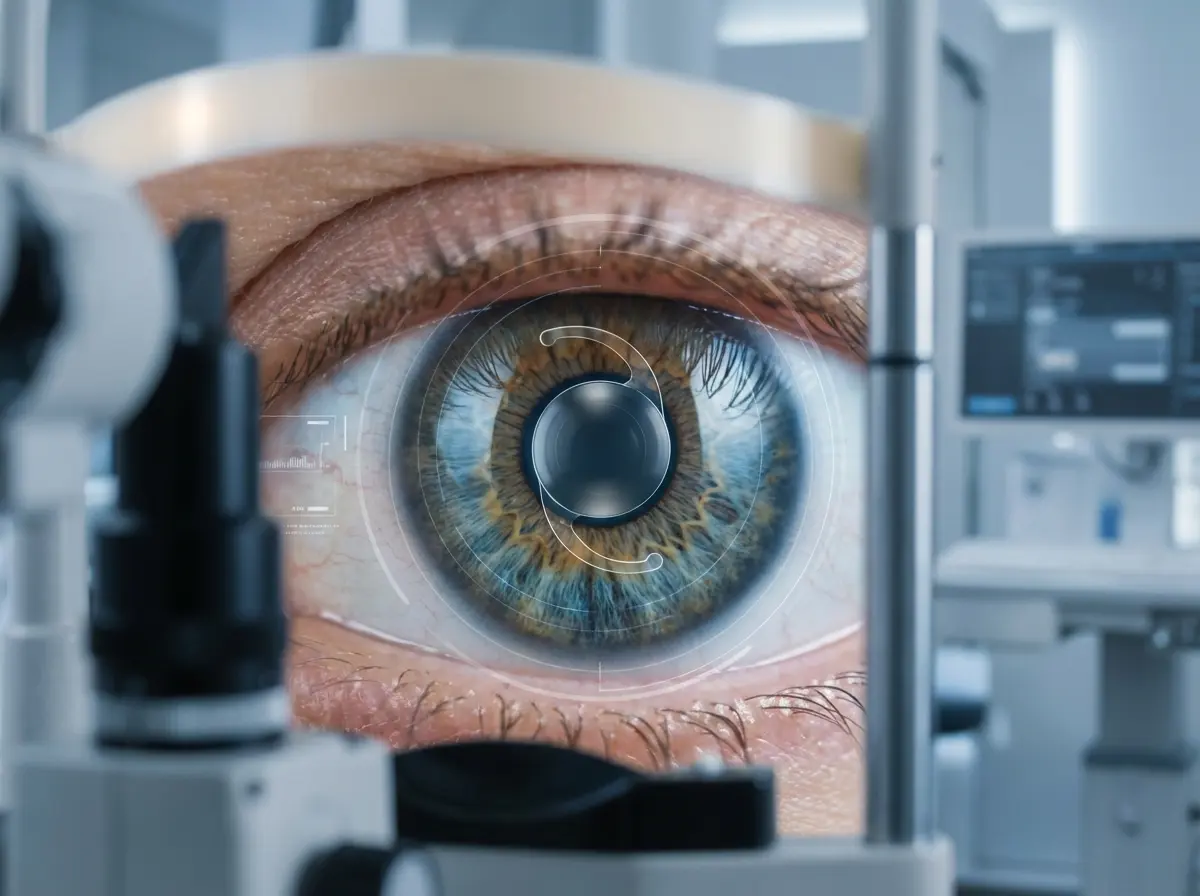
The cataract surgery is a common procedure to improve vision affected by clouding of the lens. This guide provides basic information on what cataracts are, when to consider surgery and the associated process. It will also address the types of intraocular lenses, recovery after surgery and factors that influence its success. In addition, possible complications will be discussed and frequently asked questions related to cataract surgery will be answered.
What are cataracts and how do they affect your vision?
Cataracts are an eye condition that occurs when the crystalline lens, a natural lens of the eye, becomes opaque. This clouding interferes with the passage of light into the eye. retina, which leads to a decrease in visual clarity. They often develop gradually, which may cause the affected person to be unaware of the loss of visual quality until it becomes significant.
Symptoms related to cataracts can vary, but some of the following are commonly experienced:
- Blurred visionImages may appear out of focus or less sharp.
- Difficulties in low light conditionsNight vision may be markedly impaired.
- GlareBright lights, such as those of cars, can cause discomfort and glare.
- Vision with halosSome people perceive diffuse circles around lights.
- Frequent changes in spectacle prescriptionThe need to adjust vision is becoming more common.
These symptoms can interfere with everyday activities, such as reading, driving or even recognising faces. As cataracts progress, lifestyle changes may be needed to adjust to the reduction in vision. Often, the most effective treatment to restore clear vision is surgery, which is considered a safe and effective option for those who experience a significant impact on their quality of life.
Appropriate time to consider cataract surgery
The decision to undergo cataract surgery should not be taken lightly. It is generally advisable to consider this option when vision begins to be significantly affected and daily activities are compromised. This includes difficulty driving, especially at night, or problems reading even with glasses.
Cataracts develop gradually. Therefore, if you experience symptoms such as blurred vision, glare or halos around lights, you should consult a specialist. An ophthalmologist can assess the severity of the situation and offer personalised recommendations.
The perfect time for surgery varies from person to person. However, there are certain signs that indicate it is time to act:
- Vision blurred persistent that does not improve with glasses.
- Obvious difficulties in everyday activities, such as watching television or reading.
- Important visual components of lifestyle, such as driving, become problematic.
Patients usually opt for surgery when they feel that the cataract is compromising their quality of life. The ophthalmologist's assessment will include a series of tests to determine the best time to proceed. There is no exact age, although many people have surgery from the age of 60 onwards, when the incidence of this condition is highest.
It is important to remember that, while cataract surgery is a very important secure and is often successful, it should only be done when the benefits outweigh the risks. A well-informed decision will help to make the process more effective and successful.
State-of-the-art surgery and choice of specialist
The cataract surgery with advanced cataract surgery technology femtosecond laser has significantly improved the precision of operations. This laser allows millimetric corneal incisions and controlled lens fragmentation, minimising the risk of complications and optimising visual outcomes. The laser's precision contributes to faster recovery and a higher degree of safety during the operation.
It is crucial that the surgery is planned and performed by a fully trained refractive and cataract surgery specialist, not a general ophthalmologist. Professionals with international qualifications and recognition, such as FEBOS-CR (Fellow of the European Board of Ophthalmology in Refractive Surgery) and FWCRS (Fellow of the World College of Refractive Surgeons), ensure a personalised assessment, accurate lens selection and thorough control of the procedure.
In this respect, the Dr. Ali Nowrouzi, ophthalmologist in Marbella and a specialist in cataract surgery y refractive, combines the precision of the femtosecond laser with personalised care. His extensive international experience and accreditations FEBOS-CR y FWCRS guarantee optimal visual results and maximum safety in each intervention. You can make an appointment by clicking here.
Cataract surgery process in the clinic
Cataract surgery is usually performed on an outpatient basis, which means that hospitalisation is not necessary. Before the procedure, the ophthalmologist makes a thorough assessment of the eye, measuring the curvature and length of the eye. These measurements are vital for selecting the most suitable intraocular lens for each patient.
The procedure begins with the application of local anaesthesia, allowing the patient to remain awake during the surgery, but without pain. A small incision is then made in the cornea, usually less than 2.4 mm. Through this incision, a surgical microscope will be inserted to allow the surgeon to work with total precision.
Once the cornea is opened, a device that emits ultrasound is used to fragment the opacified lens. This process is known as phacoemulsification and allows the lens to be aspirated without any problems. After the lens is removed, the intraocular lens is implanted, which can be monofocal, multifocal, trifocal or toric, depending on the patient's visual needs.
The incision created is so small that it will not normally require stitches, as it closes naturally on its own. The whole process usually takes between 15 and 45 minutes, depending on the complexity of each case.
It is important to have a follow-up consultation after surgery to assess progress and address any postoperative concerns. This care is essential to ensure proper recovery and adaptation to the new lens.

Types of intraocular lenses available and how to choose the best one for you
There are various intraocular lens (IOL) options that are used during cataract surgery. The choice of the right lens is crucial, as it influences the postoperative visual quality and the need for glasses after the operation.
The main categories of lenses are as follows:
- Monofocal LensesThese lenses correct vision at a single distance, either near or far. Generally, patients who opt for these lenses will need glasses for activities outside the corrected distance.
- Multifocal LensesThis type allows you to see at various distances (near, intermediate and far), which can reduce dependence on glasses. They are ideal for those seeking greater visual comfort in a variety of settings.
- Trifocal LensesThese are the most advanced and provide clear vision at all distances. They are suitable for patients who wish to minimise the use of glasses in their daily life.
- Toric LensesSingle or multifocal: Designed to correct astigmatism, they can be single or multifocal. They are an excellent option for those who need to adjust their vision in more than one dimension.
The choice of the most suitable lens depends on several factors. It is important to take into account the patient's specific visual needs, lifestyle and expectations after surgery. Therefore, a thorough assessment by the ophthalmologist is essential to ensure that the most suitable IOL is chosen. During the consultation, the doctor will be able to advise on which type of lens is most suitable according to the patient's ocular characteristics and daily activities.
Good communication with the doctor is essential to make an informed decision. The ophthalmologist will explain the advantages and disadvantages of each type of lens, thus helping patients to understand which option can offer the best visual quality after the procedure.
Classification of intraocular lenses (IOLs)
During surgery, different types of intraocular lenses (IOLs) can be implanted, depending on the patient's visual needs and lifestyle:
- MonofocalCorrects vision at a specific distance (near or far). Usually requires glasses for the uncorrected distance.
- Multifocal: Allows you to see at various distances (near, intermediate and far), reducing dependence on glasses.
- TrifocalClear vision at all distances, ideal for those who want to minimise the use of glasses in all their activities.
- EDOF (Extended Depth of Focus): Provides a continuous range of vision, especially useful for intermediate and distance vision, with fewer halos than traditional multifocals.
- O-ringDesigned to correct astigmatism. It can be combined with monofocal, multifocal or EDOF, adapting to patients with significant astigmatism.
The choice of the most suitable lens should be made together with a highly qualified specialist, considering the anatomy of the eye, the daily activity and the visual expectations of the patient.
Recovery and care after cataract surgery
Recovery after cataract surgery is generally quick and easy. However, it is essential to follow certain precautions to ensure proper healing. In the first few days, vision may be somewhat blurred, which is normal. The following are the most important recommendations for an optimal recovery.
- Use of eye dropsAntibiotic and anti-inflammatory eye drops are prescribed and need to be used according to medical indications. These eye drops are essential to reduce the risk of infection and aid recovery.
- Avoid physical exertionFor at least one week, it is advisable not to engage in activities that may compromise the eye. Lifting heavy objects, running or intense sports are not advisable. Gentler activities should be discussed with the doctor.
- Symptom controlIt is normal to experience some swelling or blurred vision. However, it is important to watch out for worrying signs such as fever, redness, discharge or severe pain. In case of these symptoms, contacting a doctor is crucial.
- Medical follow-upFollow-up visits are essential. Consultations will be scheduled to check the evolution of the recovery and detect possible complications in time. Attending all appointments is key to a successful recovery.
The entire postoperative period may extend over a month and a half, although stricter recommendations are generally only necessary in the first week after surgery. Vision may begin to improve rapidly, but it is essential to comply with all medical indications to ensure good results.
Factors influencing the success of cataract surgery
The successful outcome of cataract surgery can depend on a number of factors. Each of these plays an important role in ensuring that the intervention is effective and that the patient achieves good visual quality after the procedure.
- Surgeon's experienceThe skill and experience of the ophthalmologist are essential. A surgeon with extensive experience in this type of operation is better able to handle any eventuality that may arise during surgery.
- Technology usedSurgical tools and techniques used can influence the success of the procedure. Advanced equipment, such as lasers, can improve results and reduce recovery time.
- Pre-operative assessmentA thorough analysis of the patient's eye health can detect conditions that may affect the surgery. A detailed knowledge of the anatomy of the eye is essential to plan the procedure properly.
- Patient engagementFollow medical advice before and after surgery is crucial. Postoperative care and attendance at follow-up appointments are key to ensuring a smooth recovery.
- Selecting the right intraocular lensThe choice of the lens that best suits the patient's visual needs has an impact on the final results. A trained professional can advise on the best choice between monofocal, multifocal or trifocal lenses.
The success of this surgical procedure is based on a combination of these factors. Each element must be considered to ensure that the patient's experience is as positive as possible.
Possible complications and what to do in case of eye emergencies
Cataract surgery, although one of the safest procedures, can have some complications. It is essential to be informed about these risks and to know how to proceed in case of an emergency. Among the most common complications are:
- Eye infectionIt can occur if there is a lack of hygiene or inadequate postoperative care.
- Change in vision: Some patients may experience blurred or distorted vision after the operation, which may not be corrected by the use of vision correction devices.
- InflammationSwelling in the eye may be normal, but if it is excessive or persists, it should be evaluated by a doctor.
- BleedingAlthough rare, it is a complication that can arise, especially in patients with pre-existing eye conditions.
If unusual symptoms occur, it is crucial to act quickly. Some warning signs include:
- High fever or chills.
- Severe redness or severe pain in the eye.
- Unusual discharge, especially if purulent.
- Significant reduction in vision compared to the immediate postoperative period.
If you experience any of these symptoms, you should contact a specialist immediately. Do not wait for a scheduled appointment, as some complications require urgent attention to avoid further damage.
Proper follow-up and adherence to postoperative instructions are essential to prevent complications. Regular use of eye drops and scheduled check-ups are recommended practices to ensure a smooth recovery.
Frequently asked questions about cataract surgery and intraocular lenses
Cataract surgery is a common procedure, but many questions arise around it. Here we address some of the most common ones you may have.
- Is cataract surgery painful? There is no pain during the procedure, as local anaesthesia is used. There may be slight discomfort, but this is temporary.
- How long does the operation take? In general, surgery lasts between 15 and 30 minutes. Most of the time is spent on the preparation and not on the actual surgery.
- Will I need glasses after surgery? It will depend on the type of intraocular lens chosen. Some lenses may reduce the need for glasses, while others may not.
- How long does it take for vision to recover? Although improvement in vision may be noticeable within days, full recovery may take several weeks.
- What complications can arise? Although rare, risks include infection, severe inflammation or problems with the implanted lens. It is essential to follow post-operative instructions to minimise these risks.
- Can I exercise after surgery? It is recommended to avoid strenuous physical activity for at least one week. A follow-up with the ophthalmologist will help determine when it is safe to resume exercise.
- What type of intraocular lens should I choose? The choice will depend on your vision needs and lifestyle. Consult your ophthalmologist to determine the best option for you.
- Is it necessary to have revisions after surgery? Yes, it is important to attend follow-up appointments to ensure that recovery is proceeding as expected and to address any possible complications in a timely manner.